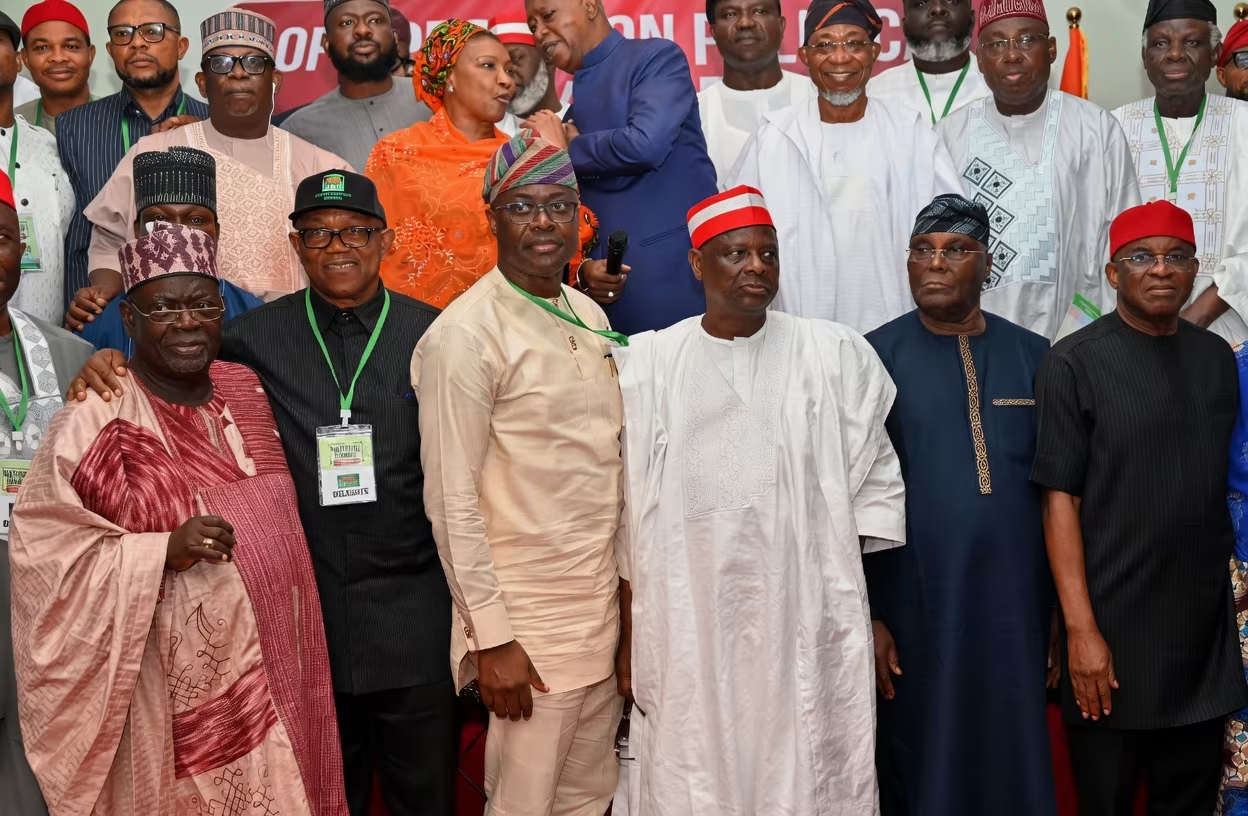
The political landscape in Nigeria has been jolted as key factions of the Peoples Democratic Party (PDP), African Democratic Congress (ADC), Accord Party, and Labour Party officially rejected the outcomes of the recent Ibadan opposition summit.
These groups have dismissed the gathering’s resolution to present a single joint presidential candidate for 2027, reaffirming their intentions to field independent candidates against President Bola Tinubu.
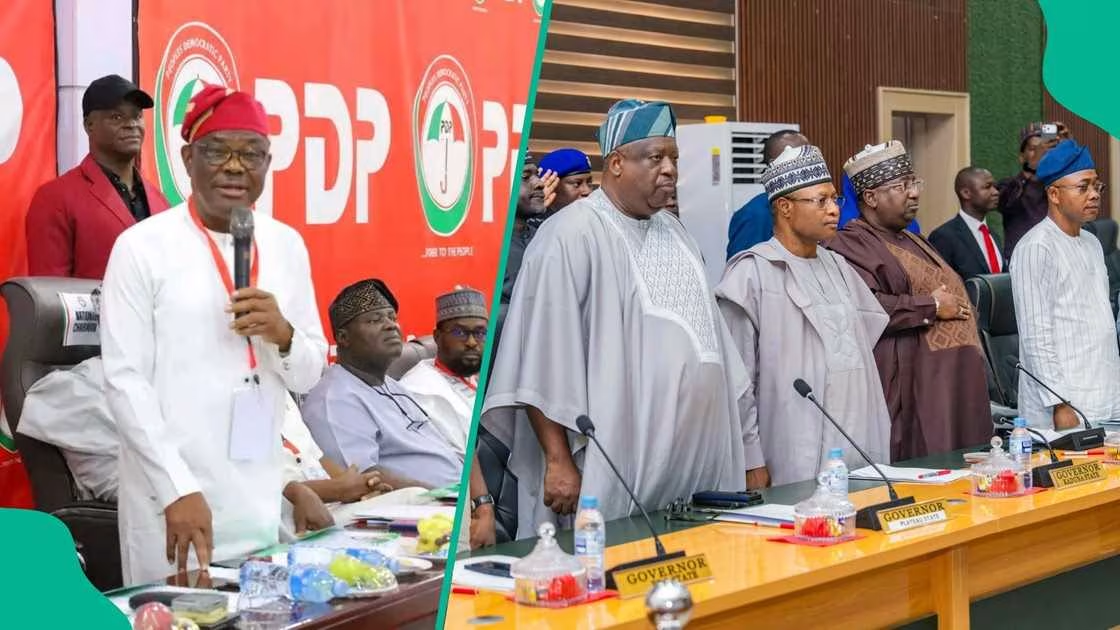
The PDP National Working Committee, aligned with FCT Minister, Nyesom Wike, went as far as to claim that high-profile figures like Atiku Abubakar and Peter Obi were “misled by impostors” who organised the event without official party sanction.
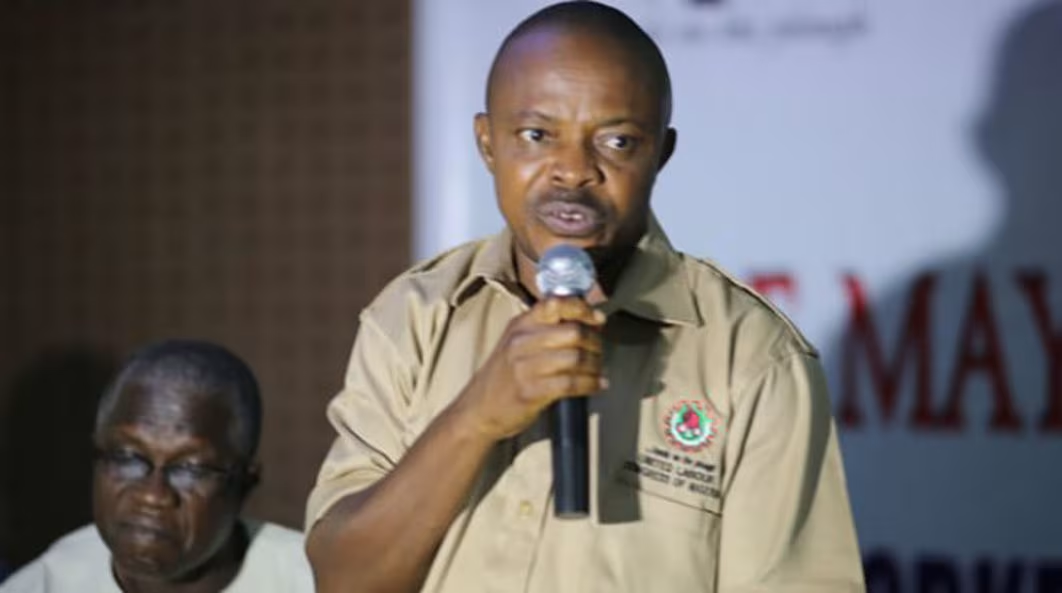
The rejection was echoed across the spectrum as the Labour Party’s Interim National Chairman, Nenadi Usman, formally disassociating the party from the summit’s resolutions. Simultaneously, rival camps within the ADC, led by Kingsley Ogga and Nafiu Gombe, denied any involvement, while the Accord Party threatened legal action against individuals parading themselves as party representatives at the meeting.
This internal resistance highlights a deepening schism between the party grassroots and the coalition of veteran leaders—including former Senate President, David Mark and former Governors Rabiu Kwankwaso and Pat Utomi—who are pushing for a unified front.
During the summit, host Governor Seyi Makinde sparked significant controversy by cautioning the Federal Government against suppressing the political will of Nigerians, drawing a historical parallel to the violent 1965 “Operation Wetie” uprising.
In a communique signed by various factional leaders, including Hakeem Baba-Ahmed of the PRP and Ajuji Ahmed of the NNPP, the coalition vowed to resist the emergence of a one-party state. They argued that a consolidated ticket is the only viable path to challenging the ruling All Progressives Congress (APC) in the next general election.
The APC has hit back at the summit’s resolutions, dismissing the gathering as an attempt to “blackmail” the administration through organised pressure. The ruling party specifically took aim at Governor Makinde, labeling him unfit for office following his references to historic political violence, which they characterized as inciting.
As legal battles over party leadership continue to simmer in the courts, this public fallout between the summit organizers and the formal party structures suggests that the road to a “mega-party” coalition remains fraught with significant structural and personal hurdles.