
The World Health Organization (WHO) announced Thursday that while additional cases of a rare hantavirus strain may emerge following a deadly outbreak aboard the cruise ship MV Hondius, the overall risk remains contained.
Three passengers have died from the Andes virus—a specific hantavirus strain capable of human-to-human transmission—sparking an international effort to track travelers who disembarked across multiple continents.
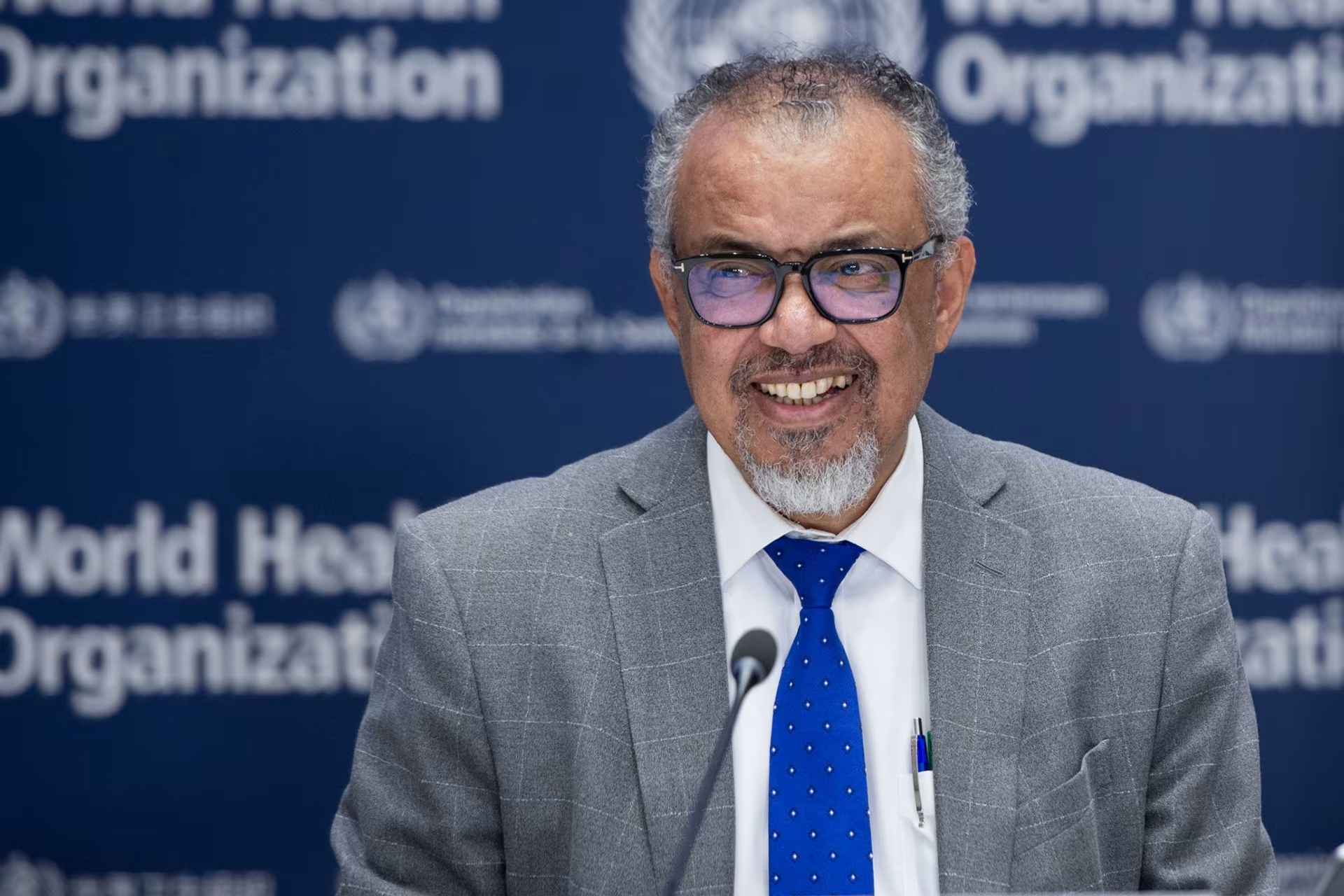
WHO Director-General, Tedros Adhanom Ghebreyesus, confirmed five total cases and three suspected infections, noting that the virus’s long incubation period of up to six weeks means more diagnoses are likely.
The alarm was raised after a Dutch couple and a German passenger succumbed to the respiratory illness. The outbreak reportedly began when a passenger contracted the virus in Argentina before boarding the vessel in Ushuaia on April 1.
Health officials are now focused on a complex contact-tracing web spanning the UK, Germany, the Netherlands, Switzerland, and South Africa.
This includes passengers from a commercial flight between Saint Helena and Johannesburg, which carried a symptomatic passenger who later died.
Despite the fatalities, health experts are urging calm and emphasizing that this is not a repeat of the COVID-19 pandemic.
Maria Van Kerkhove, the WHO’s director for epidemic and pandemic preparedness, insisted that the virus is significantly less contagious than the coronavirus. “This is not the start of an epidemic,” Van Kerkhove stated, as officials played down fears of a wider global crisis. Because there is no known vaccine or cure for hantavirus, current medical efforts are focused entirely on symptom management and strict isolation of suspected cases.
The vessel’s operator, Netherlands-based Oceanwide Expeditions, confirmed that a fourth sick passenger landed in Amsterdam on Thursday for treatment.
The MV Hondius is currently en route to Tenerife in the Spanish Canary Islands, with the operator reporting that no symptomatic individuals remain on board.
Meanwhile, the UK Health Security Agency has advised two asymptomatic returning travelers to self-isolate, maintaining that the general risk to the public remains “very low.”
As the ship continues its journey, Argentine officials are launching an investigation in Ushuaia to test local rodent populations, the primary natural reservoirs for the virus.
The WHO’s emergency alert director, Abdi Rahman Mahamud, expressed confidence that the outbreak would remain “limited” provided that countries maintain transparent communication and rigorous public health measures.
The focus now shifts to monitoring the dozens of passengers who disembarked at various stops, including the remote island of Saint Helena, to prevent further clusters of the rare disease.