
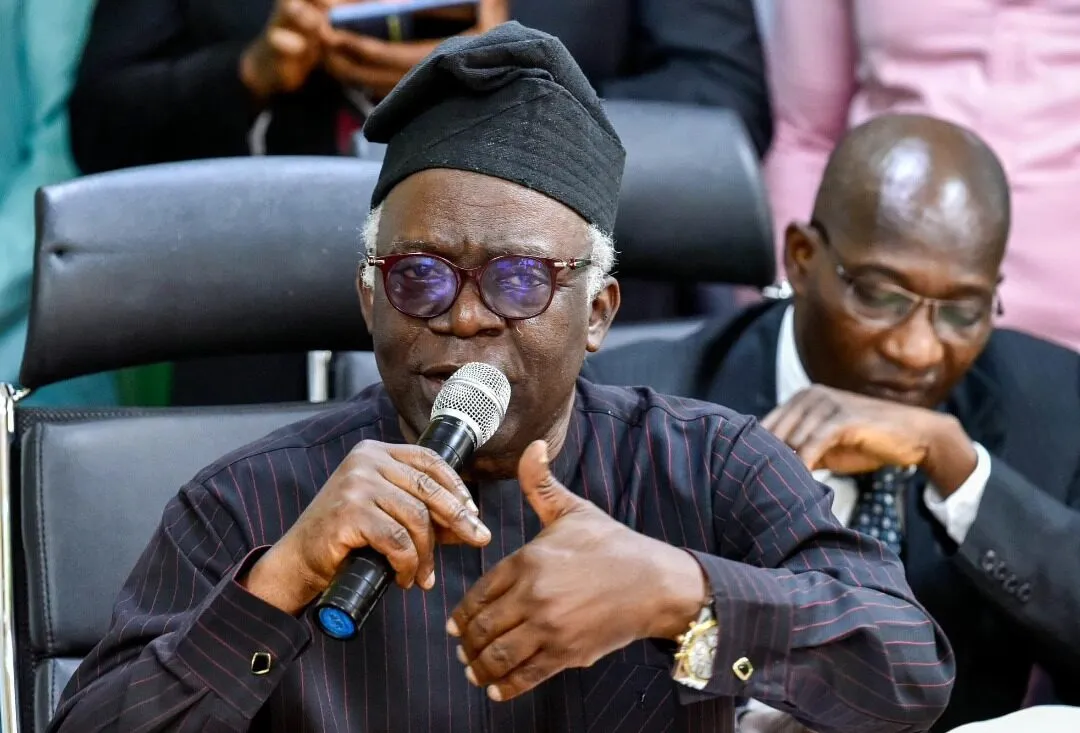
Prominent human rights lawyer and Senior Advocate of Nigeria (SAN), Femi Falana, has called on the Federal Government to transition from diplomatic protests to decisive legal action against South Africa.
The demand follows a sharp rise in the targeted killings and mistreatment of Nigerian nationals within South African territory, which human rights advocates argue requires immediate judicial intervention.
The latest outcry was triggered by the tragic deaths of two Nigerians in rapid succession earlier this month.
According to reports, Nigerian cleric, Bishop Michael Taiwo Fakunle, was shot dead by unidentified gunmen at his Johannesburg residence on September 4 after allegedly receiving threats, while another Nigerian, James Uchechukwu Nwankwo, died less than 24 hours later following an alleged interrogation by South African police officers.
Citing data attributed to diplomatic channels, Falana revealed that these incidents bring the total number of Nigerians allegedly killed in South Africa in 2026 alone to eight, with half of those deaths directly linked to South African security personnel.
Furthermore, he noted that over 100 Nigerians have lost their lives in the country between 2022 and 2026, with more than 30 of those cases allegedly involving members of the South African Police Service and the South African Defence Force.
Despite these grim statistics, victims and their families have seen a complete lack of arrests or accountability.
To secure justice, Falana has urged the Nigerian government to institute an interstate case against South Africa before the African Court on Human and Peoples’ Rights.
Citing established legal precedents such as the Burkina Faso Norbert Zongo case and the ECOWAS Court’s Apo Six ruling, the SAN emphasized that states can be held legally responsible for failing to investigate unlawful killings.
He noted that because both nations are signatories to the African Charter, regional judicial frameworks offer a viable path to compel investigations and secure reparations for grieving families.
In addition to the interstate lawsuit, Falana recommended the creation of a joint task mechanism involving the Ministry of Foreign Affairs, the Ministry of Justice, and Nigeria’s diplomatic mission in South Africa to meticulously document ongoing abuses.
He also urged Abuja to officially make the declaration under Article 34(6) of the African Court Protocol, which would empower individuals and non-governmental organizations to approach the court directly for redress.