
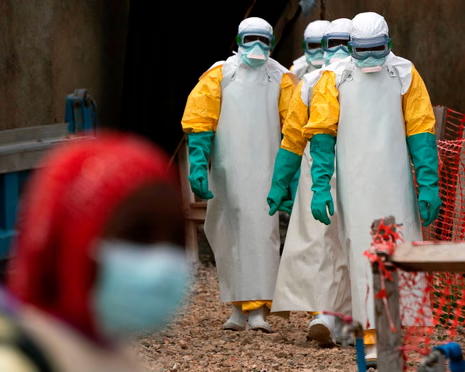
A major new Ebola outbreak has emerged in the northeastern Ituri province of the Democratic Republic of Congo (DRC), rapidly claiming 80 lives out of 246 suspected cases.
Health Minister, Samuel-Roger Kamba, warned during a press briefing in Kinshasa that the outbreak involves the rare Bundibugyo strain.
This specific variant carries a “very high lethality rate” that can reach 50 percent, and unlike the more common Zaire strain, it currently has no approved vaccine or specific treatment available.
The crisis is already threatening to spill across international borders, fueled by heavy population movements in the region.
Health officials confirmed that the virus has claimed its first life in neighboring Uganda, where a 59-year-old DRC national died in a Kampala hospital before his body was repatriated.
According to the World Health Organization (WHO), the high volume of cross-border travel has raised significant concerns about the scale of community transmission, prompting emergency response measures.
Epidemiological tracking indicates that “patient zero” was a nurse who first sought treatment in the provincial capital of Bunia on April 24, displaying classic Ebola symptoms such as fever, severe hemorrhaging, and vomiting.
The virus, which is highly contagious and spreads through direct contact with infected bodily fluids, has a variable incubation period lasting up to 21 days.
Acting Director of the US Centers for Disease Control and Prevention (CDC), Jay Bhattacharya, soundly underscored the gravity of the situation, declaring, “It is a large outbreak.”
In response to the rapidly escalating 17th outbreak to hit the DRC, the WHO is preparing to airlift five tonnes of medical equipment and infection prevention gear from the capital.
However, delivering aid remains a logistical nightmare, as the nation is four times the size of France and suffers from severely underdeveloped communications and transport infrastructure.
Local and international health authorities are working frantically to contain the virus before it matches the devastation of the country’s 2018–2020 outbreak, which claimed nearly 2,300 lives.