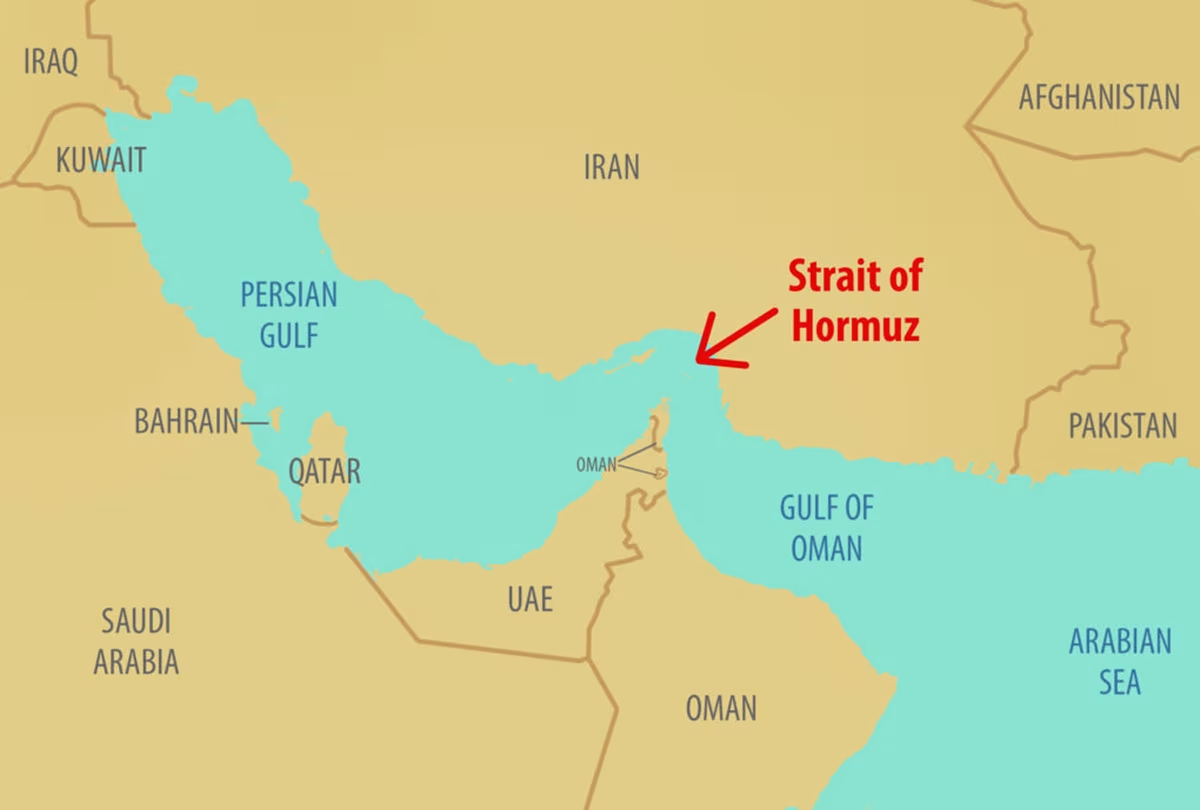
Iran’s Supreme National Security Council announced on Monday the formation of the Persian Gulf Strait Authority (PGSA), a new body designed to manage and oversee the strategic Strait of Hormuz.
The announcement, which was amplified by the Revolutionary Guards’ navy on social media, stated that the authority will provide real-time updates on operations within the waterway.
While the exact scope of the PGSA’s daily operations remains unfolding, Iranian state media previously described it as a “system to exercise sovereignty,” noting that commercial vessels traversing the strait are already being issued official regulatory directives.
The development follows months of severe disruptions in the vital maritime corridor, which Tehran has effectively closed to standard traffic since the outbreak of conflict with the United States and Israel on February 28.
Although a fragile ceasefire has been in place since April 8, Iran has maintained a tight grip on the waterway, demanding toll payments from ships seeking passage.
Iranian officials confirmed last month that the government had already received its first revenue from these maritime tolls, signaling a permanent shift away from pre-war transit protocols.
Iran’s aggressive posture in the strait has rattled global commodity markets and granted Tehran substantial geopolitical leverage, even as the United States maintains its own retaliatory naval blockade on Iranian ports.
In peacetime, the narrow chokepoint accommodates roughly one-fifth of the world’s liquefied natural gas and oil shipments, alongside critical agricultural supplies like fertilizer.
By institutionalizing its control, Iran is actively cementing its influence over a trade route essential to global energy security.
The formal rollout of the PGSA aligns with recent statements from Tehran indicating a long-term strategy for the region.
On Saturday, Ebrahim Azizi, head of the Iranian parliament’s national security commission, teased the initiative by stating that Iran had finalized a “professional mechanism to manage traffic” through the strait.
With the authority now active, Iran has made it clear that maritime traffic through the vital passage will not return to its pre-war status, fundamentally altering international shipping dynamics.