The traditional escape route of political defection has been firmly shut for disgruntled members of Nigeria’s ruling All Progressives Congress (APC), transforming the party into a high-stakes pressure cooker ahead of the 2027 general elections.
Under the newly enacted Section 77 of the Electoral Act 2026, politicians are legally barred from maintaining dual party membership, with violators facing a strict two-year custodial sentence, a N10 million fine, or both.
For a political class accustomed to party-switching as a safety valve, this statutory barrier means that instead of defecting to rival platforms, shortchanged aspirants are forced to remain within the APC structure while actively plotting its downfall through covert anti-party activities.
This legal bottleneck has intensified the fallout from a highly controversial primary process that many sidelined members describe as an engineered exercise in exclusion.
Over 180 APC aspirants across the country have already been systematically screened out or suspended for seeking legal redress against alleged candidate impositions.
Critics point to the party’s consensus candidacy model as a tool weaponized by state governors to install handpicked loyalists.
Speaking on the condition of anonymity, a senior party official admitted that relinquishing control of local nomination forms to state executives was a fatal error, leaving a heavily financed, deeply resentful network of politicians poised to sabotage official nominees from within.
The brewing subversion is manifesting across highly volatile regional flashpoints, directly threatening the ruling party’s ability to present a united front.
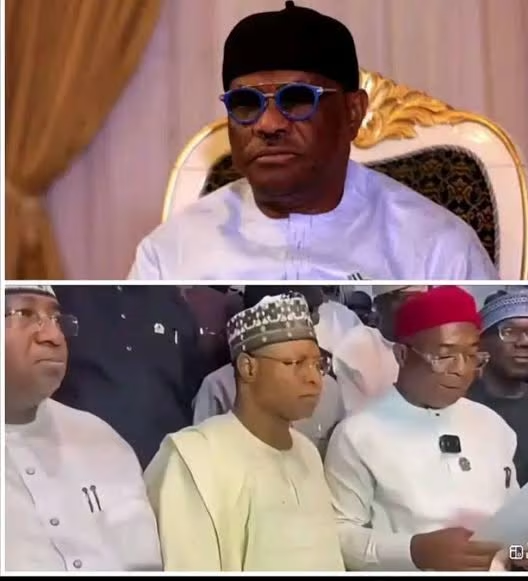
In Rivers State, the unresolved political warfare between FCT Minister, Nyesom Wike, and Governor Siminalayi Fubara continues to compromise local structures, casting deep doubt over whether Fubara’s loyalists will campaign for candidates aligned with Wike.
Concurrently, major political collisions are unfolding in Delta State between the camps of former Governor, Ifeanyi Okowa, and Senator Ned Nwoko, while in Imo State, Governor Hope Uzodinma’s Senate ambitions have set him on a direct collision course with former Governor, Rochas Okorocha—a figure widely recognized for his capacity to disrupt party machinery.
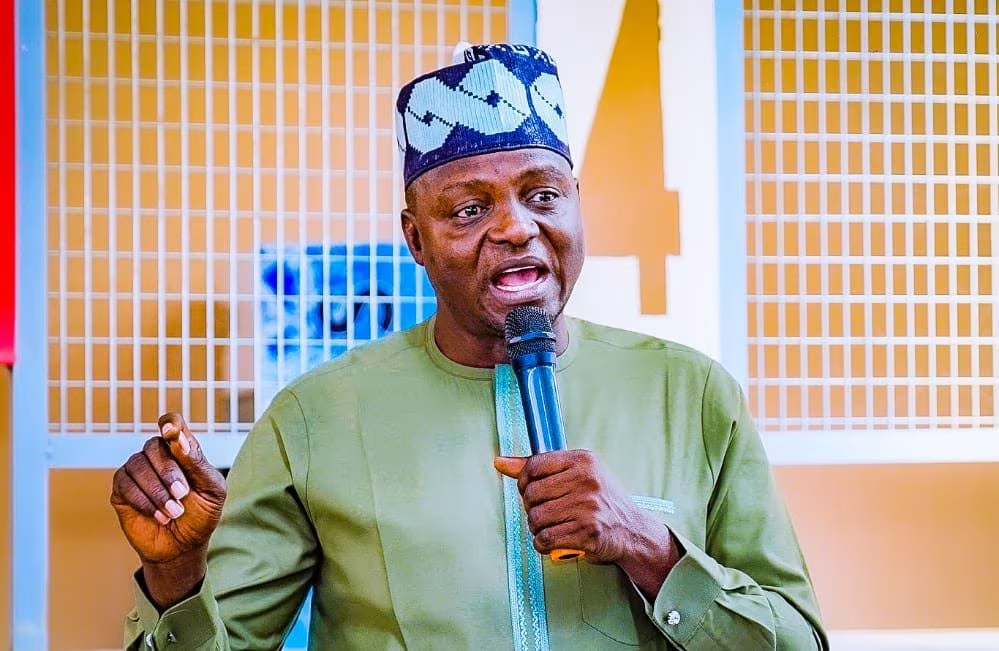
However, in a bid to contain the escalating crisis, APC National Chairman, Professor Nentawe Yilwatda, has called for maturity and sportsmanship, issuing a stern warning that any member instigating violence or anti-party conduct will face immediate suspension.
Meanwhile, National Publicity Secretary, Felix Morka, has publicly downplayed fears of an impending implosion, characterizing the consensus mechanisms and disqualifications as routine features of a robust democracy.
However, independent observers remain deeply unconvinced by the official optimism, noting that forcing wealthy, aggrieved politicians to stay inside the tent only ensures that the fire burns from within.
With the 2027 election timeline closing in, the APC leadership faces an uphill battle to pacify its internal critics before this subterranean revolt compromises its national retention strategy.
The party is forced to navigate these deep internal fractures amidst a divided Progressive Governors’ Forum, a consolidating opposition, and an electorate highly sensitive to severe economic hardships.
Ultimately, the very legislative reforms designed to bring discipline to Nigeria’s political system have inadvertently trapped a Trojan horse inside the ruling party, making internal sabotage its single greatest electoral vulnerability.