Negotiations between the Federal Government and the Joint Action Committee (JAC) representing non-academic staff ended in a stalemate on Monday, ensuring the nationwide strike by the Senior Staff Association of Nigerian Universities (SSANU) and the Non-Academic Staff Union of Educational and Associated Institutions (NASU) enters its second week.
The industrial action, which began on April 30, has effectively paralyzed public universities, shutting down essential services including clinics, administrative blocks, and hostels.
While both parties are expected to reconvene on Tuesday, May 5, at 3 p.m. for further discussions, the unions maintain that the “total shutdown” will persist until their demands for equity and fair wages are addressed.
The friction stems primarily from the government’s unilateral 30 percent salary increase offer, which the unions have flatly rejected in favour of a 40 percent adjustment.
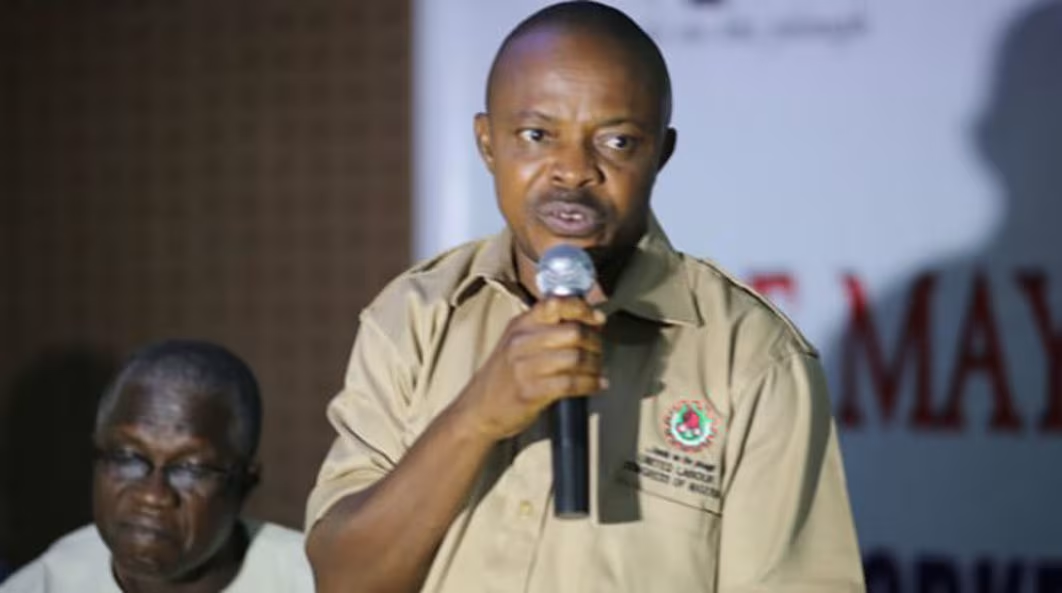
Union leaders, including SSANU National President, Mohammed Ibrahim, have accused the government of bypassing the collective bargaining process required by labour laws and failing to conclude the renegotiation of the 2009 agreement.
During Monday’s meeting, government representatives reportedly appealed for the strike to be suspended while deliberations continue, but union leaders declined, stating they must first consult their respective organs before making any commitments.
The impact of the strike is already being felt acutely across some campuses like the University of Maiduguri (UNIMAID), which has been forced to indefinitely postpone its e-examinations, citing the lack of academic support services.
Meanwhile, the University of Uyo (Uniuyo), as at Monday, continued with its e-examinations, albeit with several offices being closed and NASU staff members not at their duty posts.
In Jos, the University of Jos workers staged a peaceful protest, marching to the Senate Building to voice their frustrations over what they describe as “disparity in staff welfare.” SSANU and NASU chairpersons at the institution have warned that the government is creating a crisis by favouring certain unions over others and neglecting the non-teaching staff.
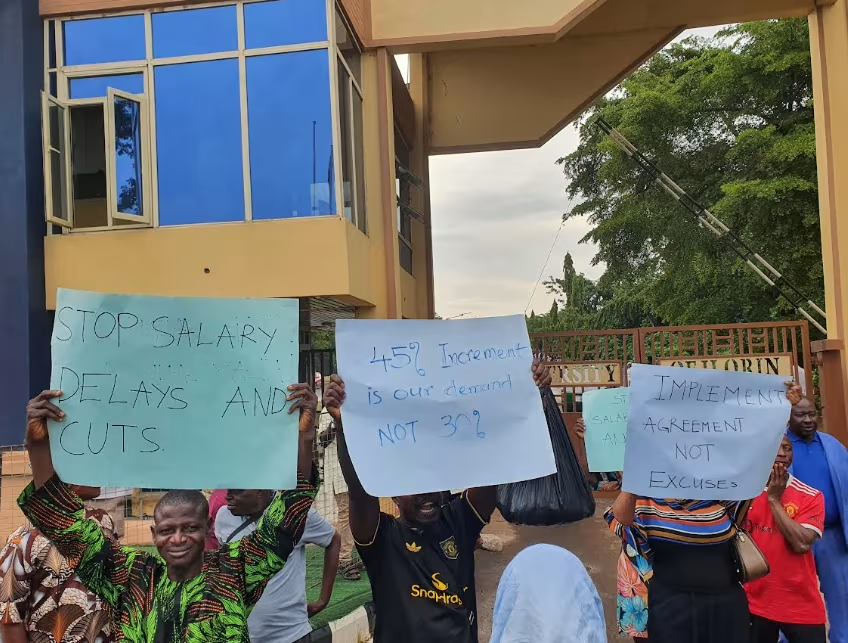
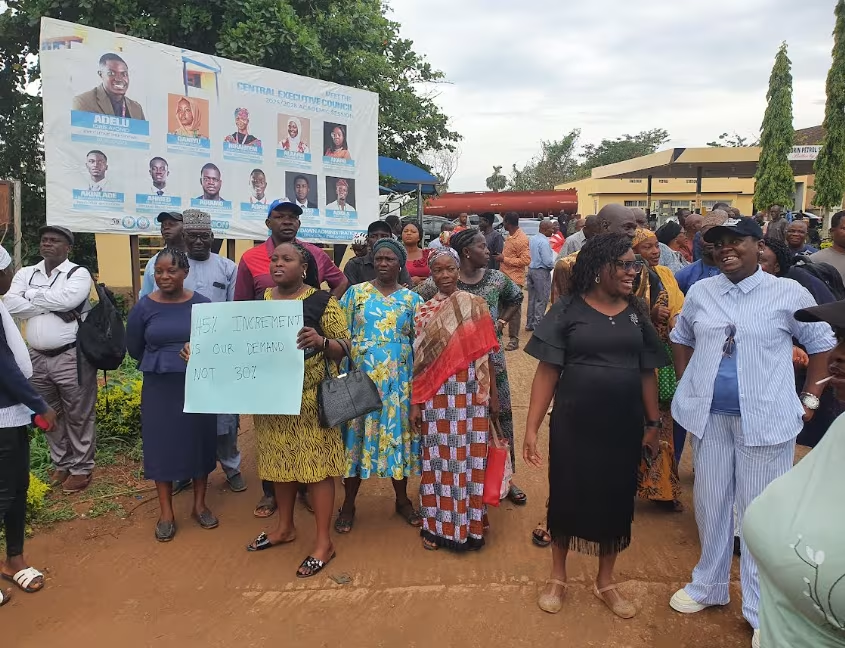
In the same vein, activities were grounded at the University of Ilorin following the commencement of the indefinite strike, with union members staging a peaceful protest at the main gate of the university, displaying placards with inscriptions such as “We demand fair treatment and living wages,” “Pay withheld salaries now,” and “45% increment is our demand, not 30%,” while enforcing compliance with the industrial action.
As the strike continues, the unions have reaffirmed their stance that the 40 percent increase remains the minimum benchmark for any resolution. “Our position remains the same: we’ve asked for equity, consideration, and fairness,” Ibrahim stated, emphasizing that even essential service providers have been ordered to withdraw.
With administrative and finance offices locked down nationwide, the pressure is mounting on the Federal Ministry of Education to bridge the gap in Tuesday’s session or face a prolonged disruption of the Nigerian higher education system.