
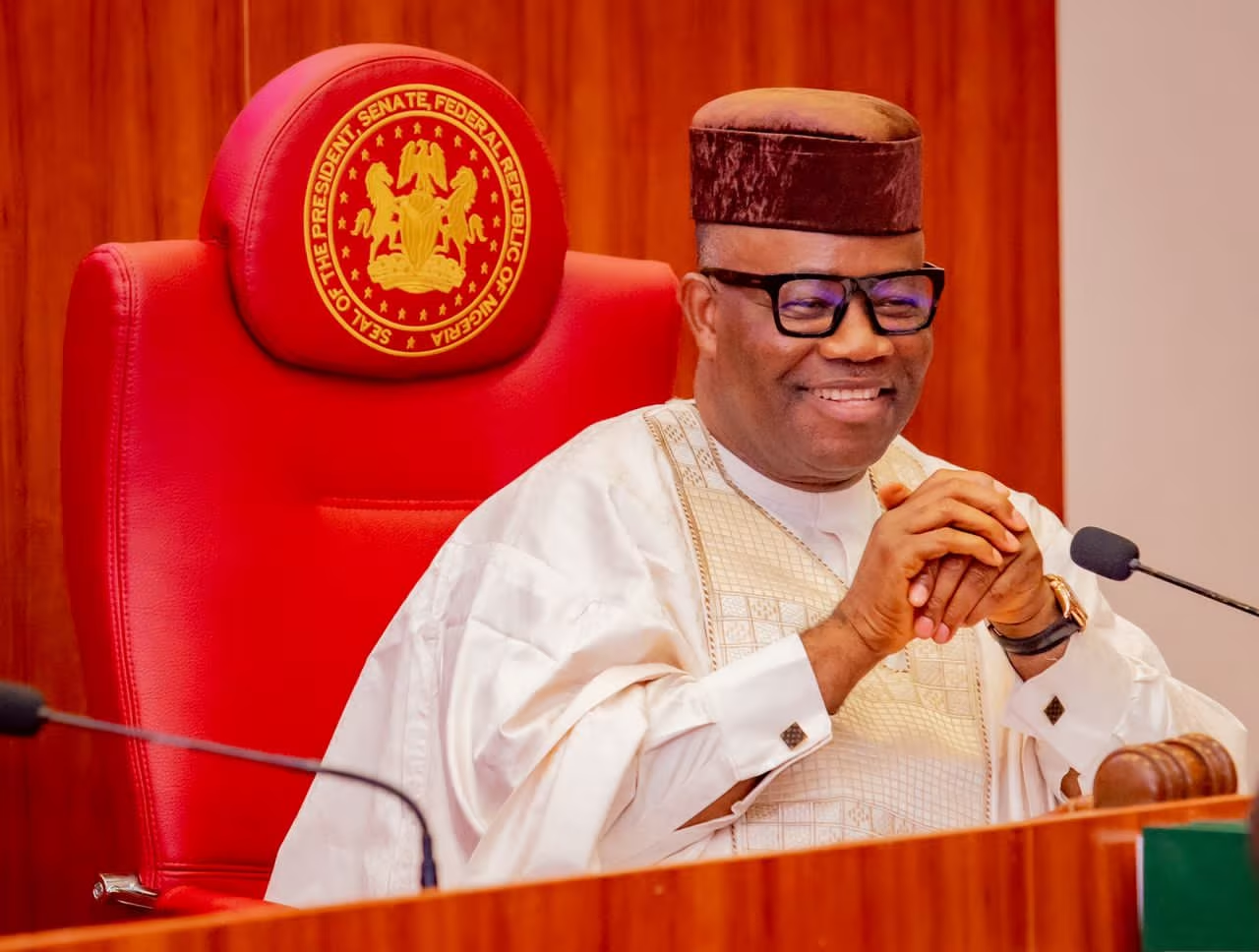
Senate President, Godswill Akpabio, stirred the upper chamber on Tuesday, jokingly declaring the African Democratic Congress (ADC) “dead” following a wave of high-profile defections.
Speaking during plenary, Akpabio suggested that the exodus had become so frequent that defecting lawmakers should simply submit a “compiled list” of their departures rather than announcing them individually.
The Senate President’s remarks followed the formal exit of several prominent legislators, including Senator Victor Umeh and Senator Enyinnaya Abaribe, who cited internal crises and “unending litigation” within the ADC as their primary reasons for leaving.
The political shift saw a significant migration toward the Nigeria Democratic Congress (NDC) and the Labour Party (LP). Senator Umeh, who officially joined the NDC, noted in his resignation letter that lingering leadership divisions made his continued membership in the ADC untenable.
Akpabio, observing the trend with his trademark wit, poked fun at the frequency of the moves, asking the chamber, “How many times can you defect in a month?” He highlighted Senator Abaribe’s journey from APGA to the ADC and finally to the Labour Party as evidence of the current volatile political landscape.
This wave of defections extended beyond the Senate into the House of Representatives, where no fewer than 17 members also dumped the ADC for the NDC.
Among those moving to the “Green Chamber’s” new majority bloc are lawmakers Yusuf Datti, Uchenna Okonkwo, Thaddeus Attah, George Ozodinobi, and Lilian Orogbu.
The mass exit represents a major blow to the ADC’s influence in the National Assembly, effectively stripping the party of its legislative foothold as the NDC continues to absorb its ranks.
In response to the “daily ritual” of defection announcements, Akpabio called for a more coordinated system to manage the floor’s time. “If you are moving from ADC, you write all of you, so that we don’t keep announcing, announcing, announcing,” he remarked, drawing laughter and mixed reactions from colleagues.
Despite the lighthearted tone in the chamber, the mass realignment signals a profound shift in the country’s political architecture ahead of future electoral cycles, as the NDC emerges as a primary beneficiary of the ADC’s internal fractures.