

Senator Adams Oshiomhole, representing Edo North Senatorial District, has issued a bold call for the Nigerian government to revoke the operating licenses of major South African companies, including MTN and DSTV.
Speaking during a heated plenary session, Oshiomhole argued that Nigeria must adopt a policy of reciprocity following renewed xenophobic attacks against Nigerians living in South Africa.
He emphasized that the era of “shedding tears” and offering sympathy must end, replaced by firm diplomatic and economic consequences.
The Senator specifically proposed the nationalization of MTN, accusing the telecommunications giant of repatriating massive profits from Nigeria while its citizens face hostility in the company’s home country.
Oshiomhole argued that withdrawing these licenses would not only serve as a necessary countermeasure to the targeting of Nigerians but would also strengthen local participation in the national economy.
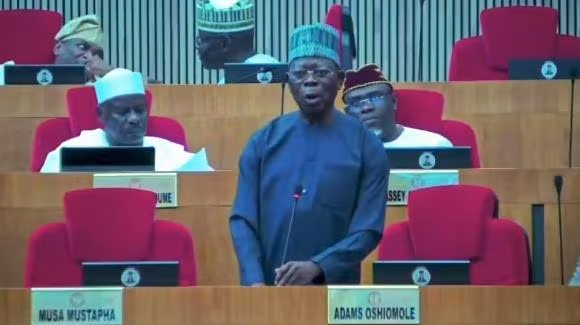
He maintained that a firm response is the only way to reshape the diplomatic dynamics between the two nations, asserting that “it is an economic struggle.”
Oshiomhole’s demands come as the House of Representatives formally condemned the latest wave of violence on Tuesday, urging the Federal Government to take immediate protective measures.
The Senator highlighted that Nigerians in South Africa are economically active contributors who are there to work rather than seek charity.
He suggested that if Nigeria “hits back” economically, South African leadership will be forced to recognize that Nigerians cannot be intimidated or mistreated without significant repercussions.
The call for such drastic economic measures has sparked intense debate regarding the future of South African investments in Nigeria.
By targeting high-profile entities like DSTV and MTN, Oshiomhole aims to leverage Nigeria’s market power to force a change in South Africa’s domestic handling of foreign nationals.
As tensions rise, the Federal Government now faces increasing pressure to balance diplomatic restraint with the growing demand for “eye-for-an-eye” economic retaliation.