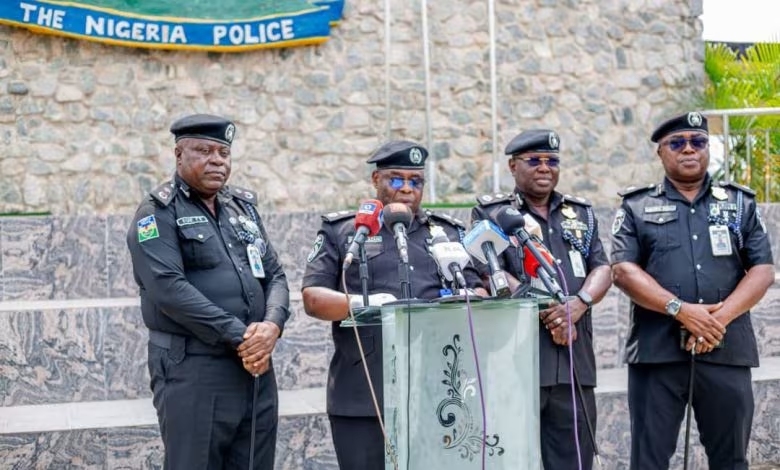
The Commissioner of Police for the Akwa Ibom State Command, CP Baba Mohammed Azare, has challenged senior police officers to actively embrace mentorship as both a fundamental leadership responsibility and a critical tool for shaping the future of the Nigeria Police Force.
Speaking on Wednesday during the Command’s End-of-the-Month Conference at the Headquarters in Ikot Akpan Abia, Uyo, CP Azare emphasized that the long-term effectiveness, strength, and institutional credibility of the police force depend entirely on the quality of leadership being cultivated in younger officers today.
The conference, themed “Mentorship in Policing: Building the Next Generation of Professional Police Leaders,” aligns directly with the Inspector-General of Police’s broader vision for a modern, accountable, and people-centered force.
CP Azare noted that policing extends far beyond mere law enforcement; it fundamentally requires the development of capable, disciplined, and service-oriented personnel.
He reminded the audience that today’s junior officers will eventually step into the roles of tomorrow’s Commissioners, Assistant Inspectors General, and Inspectors General, making deliberate guidance an absolute necessity.
According to the police boss, senior officers carry a dual responsibility that pairs operational command with intentional coaching.
He stressed that essential policing competencies—ranging from advanced investigative skills and intelligence-gathering techniques to strict professional ethics—are heavily reliant on practical experience and guided exposure rather than formal classroom instruction alone.
By transferring this institutional knowledge, senior officers can bridge the gap between generations and preserve the core values of the force.
Furthermore, CP Azare highlighted mentorship as a powerful shield against misconduct, corruption, and the abuse of authority.
He maintained that officers who are guided by positive, principled leadership are far more likely to uphold human rights, maintain integrity, and foster public trust.
In today’s landscape, modern policing demands total transparency and strict adherence to the rule of law, making the continuous ethical grooming of younger personnel a vital component of public confidence.
Concluding his address, the Commissioner urged senior officers to view mentorship as a strategic investment in the legacy of the Nigeria Police Force.
He asserted that true leadership success is not merely measured by crime statistics, arrest records, or short-term operational achievements, but by the number of capable leaders produced and the professional values successfully transmitted to succeeding generations.
The lecture sparked robust discussions among the participating officers, who collectively affirmed their commitment to strengthening leadership capacity and ensuring sustainable succession within the force.