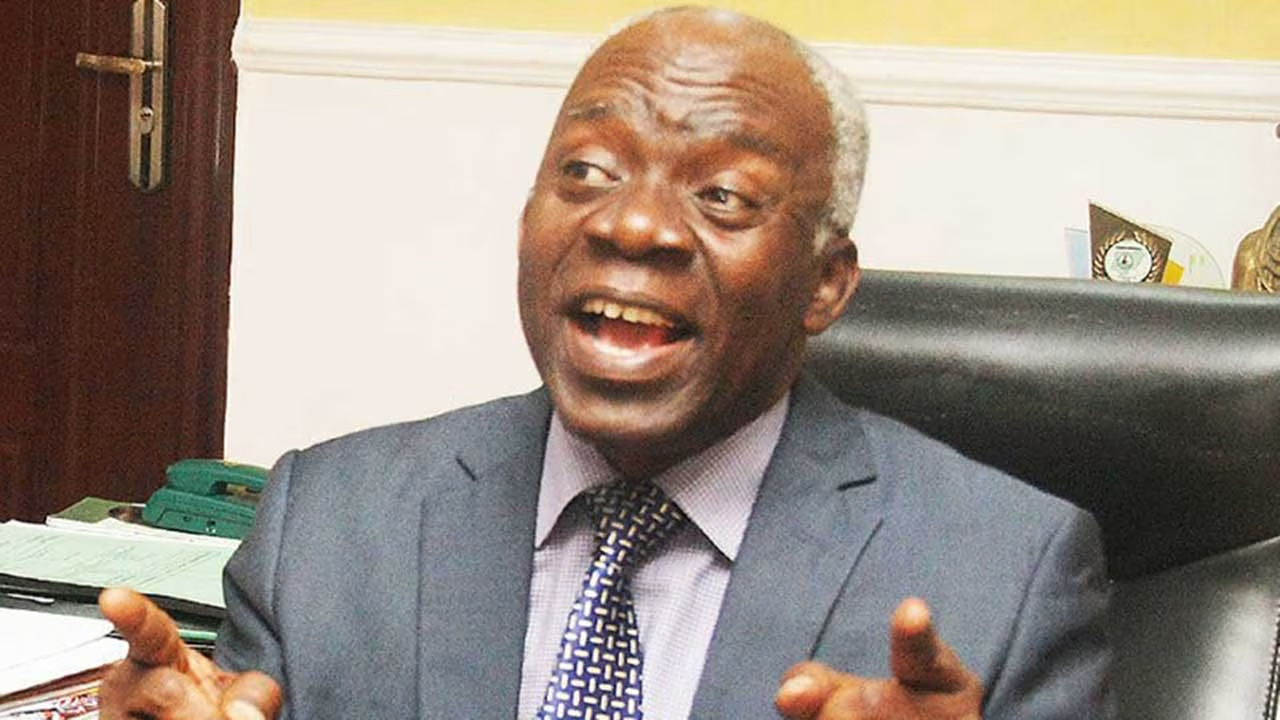
Renowned human rights lawyer and Senior Advocate of Nigeria (SAN), Femi Falana, has cautioned that the creation of state police forces will not resolve Nigeria’s deep-seated insecurity unless underlying economic crises are resolved.
Falana emphasized that an effective solution is impossible without the government aggressively addressing widespread poverty and youth unemployment.
He argued that the country’s security challenges are often narrowly reduced to a debate over policing structure, completely ignoring social security and the harsh economic conditions driving young citizens into criminal activity.
Reviewing the nation’s history, the senior lawyer pointed out that regional or decentralized policing is not a new concept to Nigeria.
He noted that the country successfully operated a decentralized policing system during the First Republic. However, this structure was eventually abolished due to what he described as gross abuse of police powers by regional leaders who routinely weaponized local law enforcement against political opponents.
Falana warned that Nigeria must thoroughly examine and address the historical vulnerabilities that led to the collapse of the dual policing system if it seriously intends to return to it.
Without establishing foolproof safeguards against political victimization and the misuse of power, he suggested that a new state policing architecture might simply replicate the oppressive failures of the past.
Beyond historical risks, the human rights advocate raised strong concerns regarding modern operational checks and balances.
He questioned how state governments would be held accountable under the new framework, stressing the vital need for independent oversight to ensure local forces serve the public rather than regional executives.
Finally, Falana highlighted a major structural hurdle: the financial viability of the initiative.
He expressed deep skepticism over the ability of several state governments to sustainably fund and equip independent police services, especially given that many states currently struggle to pay basic civil servant salaries.