
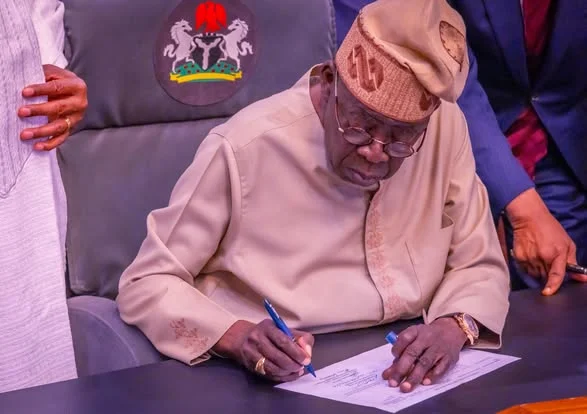
President Bola Tinubu has announced sweeping reforms to the National Youth Service Corps (NYSC), marking the most significant overhaul of the scheme since its inception in 1973.
Under the new directive, corps members will now be deployed to security-challenged states, a move that the President assured would be strictly guided by thorough risk assessments.
In another major structural shift, Tinubu revealed that the scheme will now be led by a civilian Director-General, breaking away from the long-standing tradition of appointing military personnel to head the agency.
The announcement follows a Monday Federal Executive Council (FEC) meeting, after which the Minister of Youth Development, Ayodele Olawande, and the Special Adviser to the President on Policy and Coordination, Hadiza Bala Usman, jointly briefed journalists on the approved changes.
Taking to his official X account, President Tinubu emphasized that these reforms are aimed at strengthening the governance, standards, and overall dignity of the NYSC.
He noted that the overhaul is a fulfillment of his inauguration promise to feature women and youth prominently and create meaningful opportunities for the younger generation.
A central piece of the reform is the extension of the NYSC orientation programme into a rigorous six-week journey designed to better prepare youth for work, enterprise, and national service.
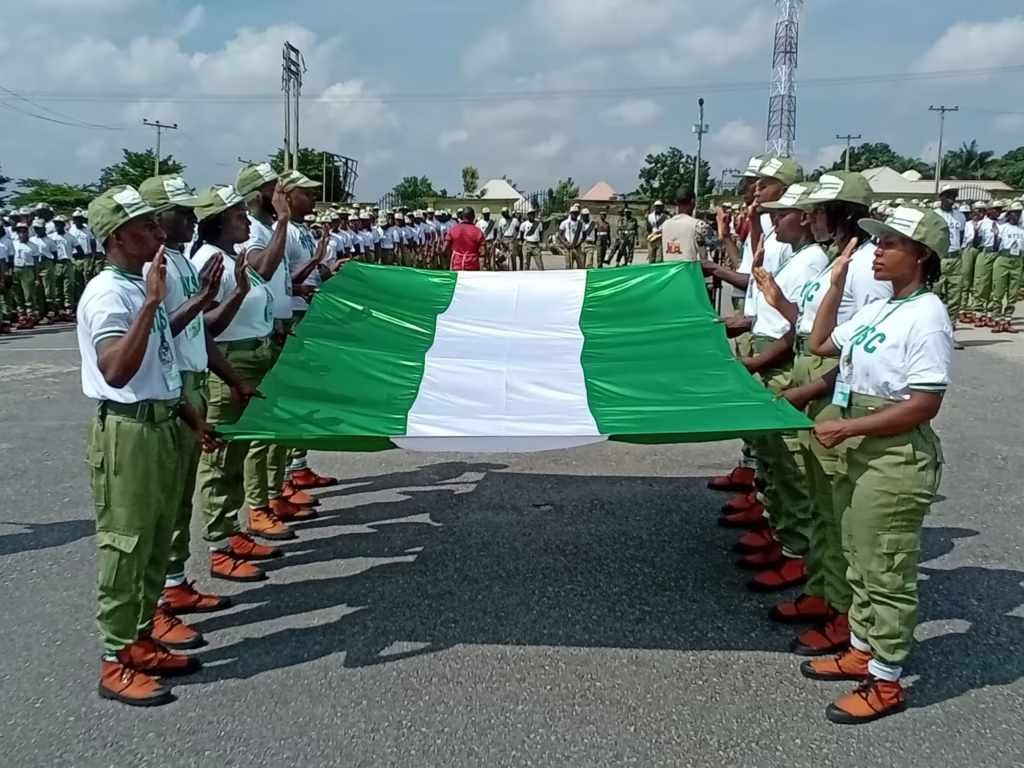
The restructured orientation will begin with modules on civic responsibility, leadership, values, and personal development, before transitioning into career readiness, entrepreneurship, and digital and financial skills.
The final phase of the camp will provide specialized training tailored to each corps member’s academic background and chosen career pathway.
According to the President, these specialized training streams will span critical sectors of the economy, including agriculture, health, education, technology, law, public service, and infrastructure.
Additionally, corps members will receive targeted training in the green economy, enterprise, the creative economy, and para-military or security services.
This diversified curriculum is intended to transform the scheme from a mere mobilization exercise into a robust engine for capacity building.
Reflecting on the 53-year history of the NYSC, President Tinubu acknowledged its vital role in fostering national unity but maintained that modern Nigeria demands a more dynamic approach.
He emphasized that the nation’s youth, who make up nearly 70 percent of the population, should not be viewed as a burden to be managed.
Instead, he repositioned them as the primary drivers of the one-trillion-dollar economy his administration is actively building, framing the new NYSC as a premier national development platform for skills, employability, and productivity.