The World Bank has approved a $1.25 billion (approximately ₦2.1 trillion) Development Policy Financing (DPF) loan for Nigeria to accelerate private sector-led growth, create jobs, and strengthen the nation’s business environment.
Announced on Wednesday, the approval comes amid intense public scrutiny and growing social media criticism regarding Nigeria’s rising debt profile and its increasing dependence on external borrowing.
In response to these concerns, the global lender emphasized that the new facility is specifically structured to finance critical structural reforms that solidify economic growth, rather than funding regular recurrent government expenditures.
This major financial injection is tied to the newly launched Nigeria Actions for Investment and Jobs Acceleration (NAIJA) DPF operation.
It coincides with the World Bank Group’s adoption of a new six-year Country Partnership Framework (CPF) for Nigeria, spanning 2026 to 2032.
According to official statements, this overarching strategy is designed to assist Nigeria in transitioning toward a more inclusive and resilient economy.
By implementing targeted reforms, the program aims to systematically unlock private investment, enhance market competitiveness, and significantly expand employment opportunities across Africa’s largest economy.
The scope of the approved reforms spans several vital sectors of the Nigerian economy. Key target areas include deepening domestic capital markets, modernizing electronic governance and digital economy regulations, and advancing long-overdue power sector overhauls.
Additionally, the funding will be utilized to reduce regional trade barriers in alignment with ECOWAS and African Continental Free Trade Area (AfCFTA) commitments, improve smallholder access to high-quality agricultural seeds, and strengthen domestic revenue mobilization to ensure long-term fiscal sustainability.
Over the next six years, the ambitious framework aims to deliver tangible improvements to millions of citizens, including expanding electricity access to 32 million Nigerians, delivering broadband connectivity to 58 million people, and supporting 9.5 million farmers.
World Bank Country Director for Nigeria, Mathew Verghis, noted that while recent macroeconomic adjustments have successfully stabilized the economy, deeper structural reforms are now vital to translate those gains into improved everyday living standards.
To mitigate investor anxieties, the International Finance Corporation (IFC) and the Multilateral Investment Guarantee Agency (MIGA) will also actively provide capital mobilization and political risk insurance.
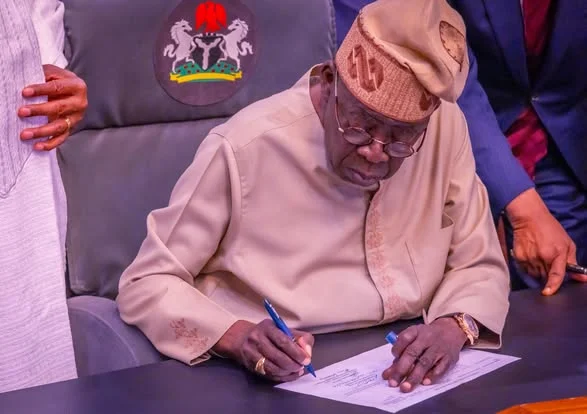
Managed by the Federal Ministry of Finance, this facility marks the second-largest single World Bank loan secured under President Bola Tinubu’s administration, following a $1.5 billion economic stabilization loan approved in June 2024.
The initiative underscores the federal government’s ongoing economic strategy, which heavily relies on multilateral policy-based lending to finance aggressive fiscal reforms.
Ultimately, the administration hopes this package will create a highly competitive environment capable of attracting the sustained private investment needed to stimulate long-term national growth.