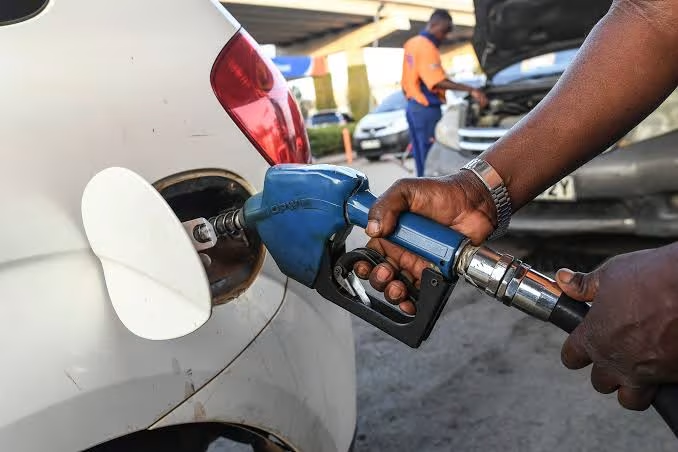
The Federal Government on Monday convened a high-level stakeholder meeting in Abuja to address growing concerns over the pricing of Premium Motor Spirit (PMS).
Held at the headquarters of the Nigerian Midstream and Downstream Petroleum Regulatory Authority (NMDPRA), the engagement brought together key industry players, including representatives from the Dangote Refinery, the Federal Competition and Consumer Protection Commission (FCCPC), and the Petroleum Products Retail Outlets Owners Association of Nigeria (PETROAN).
The urgent convention comes on the heels of mounting public expectation for a reduction in domestic pump prices, following a recent drop in global crude oil benchmarks and an expansion in local refining capabilities.
Convened under the directive of the Minister of State for Petroleum Resources (Oil), Heineken Lokpobiri, the session aimed to tackle the persistent disconnect between international market shifts and local retail costs.
Speaking at the event, NMDPRA Chief Executive Rabiu Umar emphasized that the international crude market had seen a noticeable moderation in prices as geopolitical tensions eased over the past six months.
Despite this decline in replacement costs, domestic fuel prices have remained stubbornly high, prompting regulatory intervention to interrogate market forces and eliminate operational bottlenecks.
The regulatory authority clarified that the high-level meeting was designed to foster industry-wide collaboration rather than impose rigid price controls.
Umar noted that the government is seeking an open, solution-oriented dialogue with marketers to examine inventory management, enhance market surveillance, and accelerate key stability mechanisms like the National Strategic Stock (NSS).
He urged participants to engage constructively to find a balanced path forward that maintains business viability while safeguarding citizens from unfair financial strain.
Reiterating the administration’s stance on economic reforms, the NMDPRA boss underscored that President Bola Tinubu has laid a resilient foundation for a deregulated and investment-driven energy sector.
However, he issued a stern reminder to operators that deregulation is not a license for market distortion or consumer exploitation.
Instead, the policy is intended to drive market efficiency, maximize value, and ensure that the benefits of global market improvements are passed down to Nigerian consumers without unnecessary delays.
Moving forward, the federal government and downstream stakeholders are expected to continue extensive consultations to establish a more transparent pricing framework.
The regulator stressed that marketer profitability and public welfare must coexist to secure long-term national energy security.
As the dialogue progresses, the public remains watchful for a swift alignment between falling global crude oil costs and the prices reflecting at retail stations across the country.