A joint delegation from the World football governing body, FIFA, and the Confederation of African Football, CAF, has concluded an intensive week of consultations in Abuja, meeting with Nigerian football stakeholders to chart a path forward following a severe governance crisis at the Nigeria Football Federation, NFF.
The high-stakes assessment mission comes in the wake of mounting dissatisfaction over the administration of the sport, which reached a boiling point after the Super Eagles missed out on the 2026 World Cup and the Super Falcons failed to qualify for the 2027 Women’s World Cup.
These back-to-back disappointments ultimately forced NFF President Ibrahim Musa Gusau and the federation’s leadership to resign in August, well ahead of schedule.
To navigate the leadership vacuum, the four-member FIFA-CAF delegation held targeted, separate consultations with key constituencies—including state FA chairmen, former NFF leaders, and player representatives—rather than a single mass gathering.
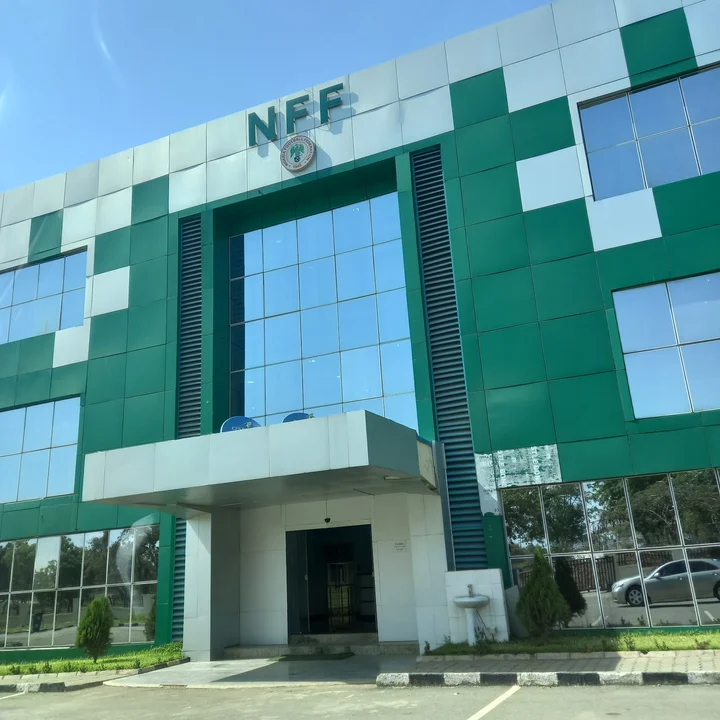
The meetings took place under heavy security at the NFF headquarters, underscoring the delicate political climate surrounding the sport.
Alongside Nigeria’s National Sports Commission, the global and continental governing bodies are currently fine-tuning a comprehensive reform roadmap to restore stability to the nation’s most popular sport.
Amid the political tension, the meetings yielded a rare display of unity among domestic football groups.
Prominent former Super Eagles internationals, Tijani Babangida and Chikelue Iloenyosi, joined players’ union leader, Harrison Jalla, to represent professional footballers during the talks.
Speaking after the sessions, Jalla noted that the Players’ Union, the Coaches’ Association, and the Referees’ Association had successfully bridged historical divides to align on a unified reform pathway.
A cornerstone of this unified demand is the push for equal representation and voting rights across all levels of the NFF, including the Congress, the Board, and its standing committees.
Furthermore, local stakeholders strongly emphasized that any forthcoming normalization process must be driven organically from within Nigerian football rather than dictated entirely from the outside.
These discussions highlight a collective determination to ensure that the voices of players, coaches, and match officials carry equal weight in future governance.
With the Abuja fact-finding mission now wrapped up, all eyes turn to Zurich and Cairo as FIFA and CAF weigh the findings to determine the next steps.
The federation’s electoral process—including a previously scheduled September 27 congress—remains suspended while global football authorities decide whether to formally establish a Normalisation Committee and set a timeline for fresh, transparent NFF elections.