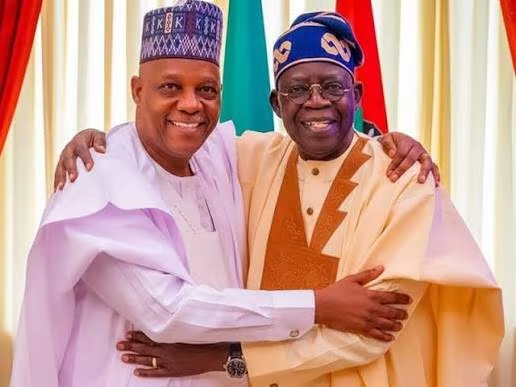
President Bola Tinubu has called for a fundamental restructuring of Africa’s economic landscape, urging the continent to transition from a supplier of raw materials to an industrial powerhouse.
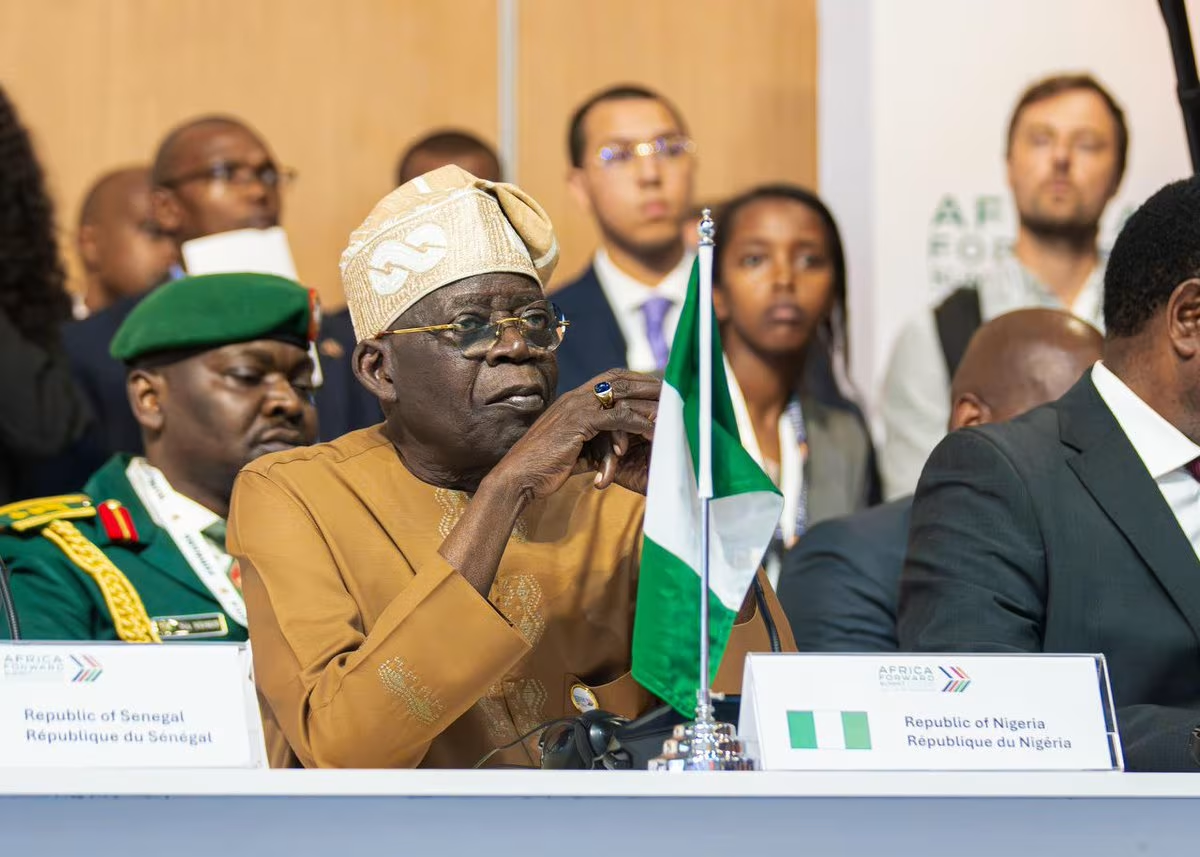
Speaking Tuesday at the Africa Forward Summit in Nairobi, Tinubu joined a high-level delegation of government officials and private sector leaders to advocate for a future where African nations refine their own resources rather than exporting wealth only to buy it back as expensive finished goods.
The President pinned the continent’s industrial stagnation on a “global financial architecture” that he claims unfairly penalizes African nations.
He argued that despite painful but necessary domestic reforms—such as Nigeria’s fuel subsidy removal and exchange rate unification—African countries continue to face punitive interest rates and restrictive borrowing conditions.
This financial imbalance, Tinubu noted, systematically starves critical sectors like steel, textiles, and agro-processing of the affordable capital required to compete on the global stage.
Beyond industrialization, Tinubu highlighted the strategic importance of the “blue economy,” positioning Nigeria’s maritime sector as a gateway for regional prosperity.
He pledged to deepen cooperation through the Deep Blue Project to secure the Gulf of Guinea, emphasizing that predictable regulation and maritime security are the bedrock of private investment. “Nigeria is ready to work with other Gulf of Guinea states through shared maritime intelligence,” the President stated, linking regional safety directly to economic stability.
Concluding his address at the summit, which was co-hosted by Presidents Emmanuel Macron and William Ruto, Tinubu clarified that Africa is seeking equity rather than aid.
He maintained that the continent is demanding a global financial system that “intentionally enables” industrial growth and fair market competition.
The summit, attended by leaders from over 30 countries, remains a focal point for ongoing discussions regarding digital innovation, climate development, and the future of African trade.