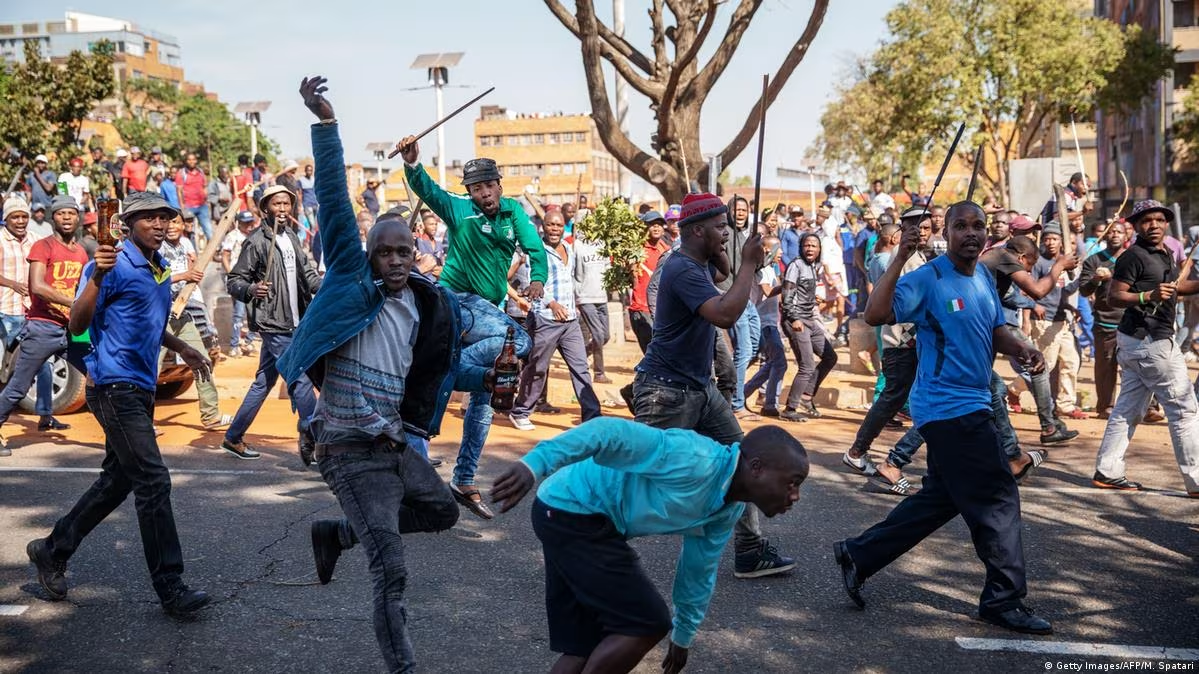
Fresh waves of xenophobic violence in South Africa have resulted in the deaths of two Nigerians, triggering widespread panic within the diaspora community and sparking urgent diplomatic intervention from the Federal Government.
The Nigerian Consulate General in Johannesburg confirmed the victims as Ekpenyong Andrew, whose body was discovered in a Pretoria mortuary after an encounter with metro police and Amaramiro Emmanuel, who reportedly died following an assault by South African National Defence Force personnel.
These separate incidents, both involving local security forces, have fueled allegations of systemic profiling and excessive force against foreign nationals.
In response to the killings, Consul-General, Ninikanwa Okey-Uche, issued a stern statement calling for a transparent investigation by the Independent Police Investigative Directorate. She emphasized that regardless of any allegations, all individuals are entitled to due process and the presumption of innocence.
The consulate is currently providing support to the bereaved families while engaging with South African authorities to address the disturbing trend of criminalizing Nigerians.
Meanwhile, the Nigerian Citizens Association in South Africa (NICASA) described the situation as alarming, citing a rise in inflammatory rhetoric and discriminatory enforcement practices.
The violence extends beyond these targeted killings, as viral videos depict mobs intimidating foreign traders and demanding they leave the country. In one instance, a Nigerian trader was ordered to shutter his business despite his long-term residency, with protesters claiming they were “fixing” South Africa by removing foreigners.
The atmosphere of hostility was further darkened by the daylight assassination of an Ethiopian national in Johannesburg, an attack captured on CCTV that appeared to be a deliberate and unprovoked targeted killing.
Amid the escalating tension, the Nigerians in Diaspora Commission (NiDCOM) has issued safety advisories for citizens in Durban, Cape Town, and KwaZulu-Natal, urging them to monitor local developments and temporarily close businesses if necessary.
While South African police have officially condemned the intimidation as a violation of human rights, the lack of immediate arrests in these high-profile cases has left the Nigerian community feeling vulnerable and demanding more robust protection from both their host nation and their home government.
Diplomatically, the Nigerian Ministry of Foreign Affairs has formally called upon the South African government to uphold its obligation to protect foreign lives and property. On the occasion of South Africa’s Freedom Day, Nigeria balanced its demand for justice with a reminder of the historical ties between the two nations rooted in the anti-apartheid struggle.
While South African President, Cyril Ramaphosa, urged foreign nationals to respect local laws and traditions, the Nigerian government maintains that the “enduring partnership” between the two giants of the continent depends on the safety and dignity of all African citizens.