
The Senator representing Kogi Central, Natasha Akpoti-Uduaghan, has officially declared her intention to seek re-election in the 2027 senatorial polls.
In a recent social media announcement, the Peoples Democratic Party (PDP) lawmaker stated that she accepted the overwhelming endorsements and calls from her constituents to contest for a second term.
Expressing deep gratitude, she confirmed her candidacy with a firm “YES,” pledging to continue her service to the district with a renewed sense of purpose and commitment.
This early declaration sets the stage for what is expected to be another high-stakes electoral battle in Kogi Central. Akpoti-Uduaghan, the first elected female senator from Kogi State, is likely to face a formidable challenge from the former governor of the state, Yahaya Bello.
Bello, a prominent figure in the All Progressives Congress (APC), has already signaled his interest in the seat, positioning himself as a direct rival in the upcoming race despite his ongoing legal battles and corruption charges.
Akpoti-Uduaghan’s tenure has been defined by a mix of legislative milestones and significant controversy. While she has championed constituency projects involving digital learning and infrastructure, her time in the Red Chamber has been marred by a six-month suspension for alleged misconduct and a refusal to occupy her assigned seat.
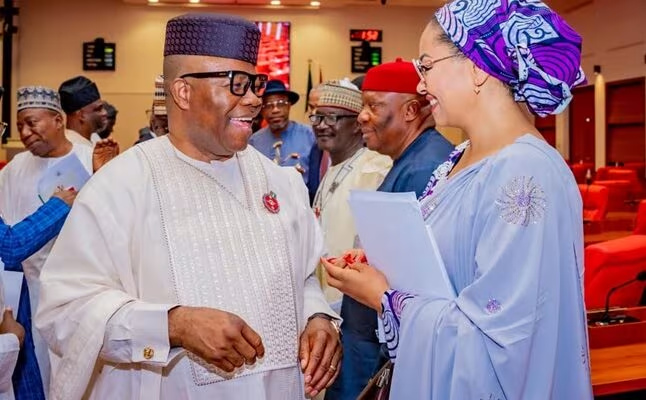
Furthermore, just this month, a Lokoja High Court ordered her to pay N1 billion in damages to Yahaya Bello for defamation; a judgment she has since rejected and vowed to appeal at the higher court.
As the 2027 election cycle begins to take shape, the senator’s move is expected to trigger early political mobilization across the district. Aligning herself with the Nyesom Wike-backed faction of the PDP, Akpoti-Uduaghan’s bid will test the strength of her grassroots support against the influence of the APC’s political machinery.
With both heavyweights effectively in the ring, Kogi Central remains a critical focal point for Nigeria’s evolving political landscape heading into the next general elections.