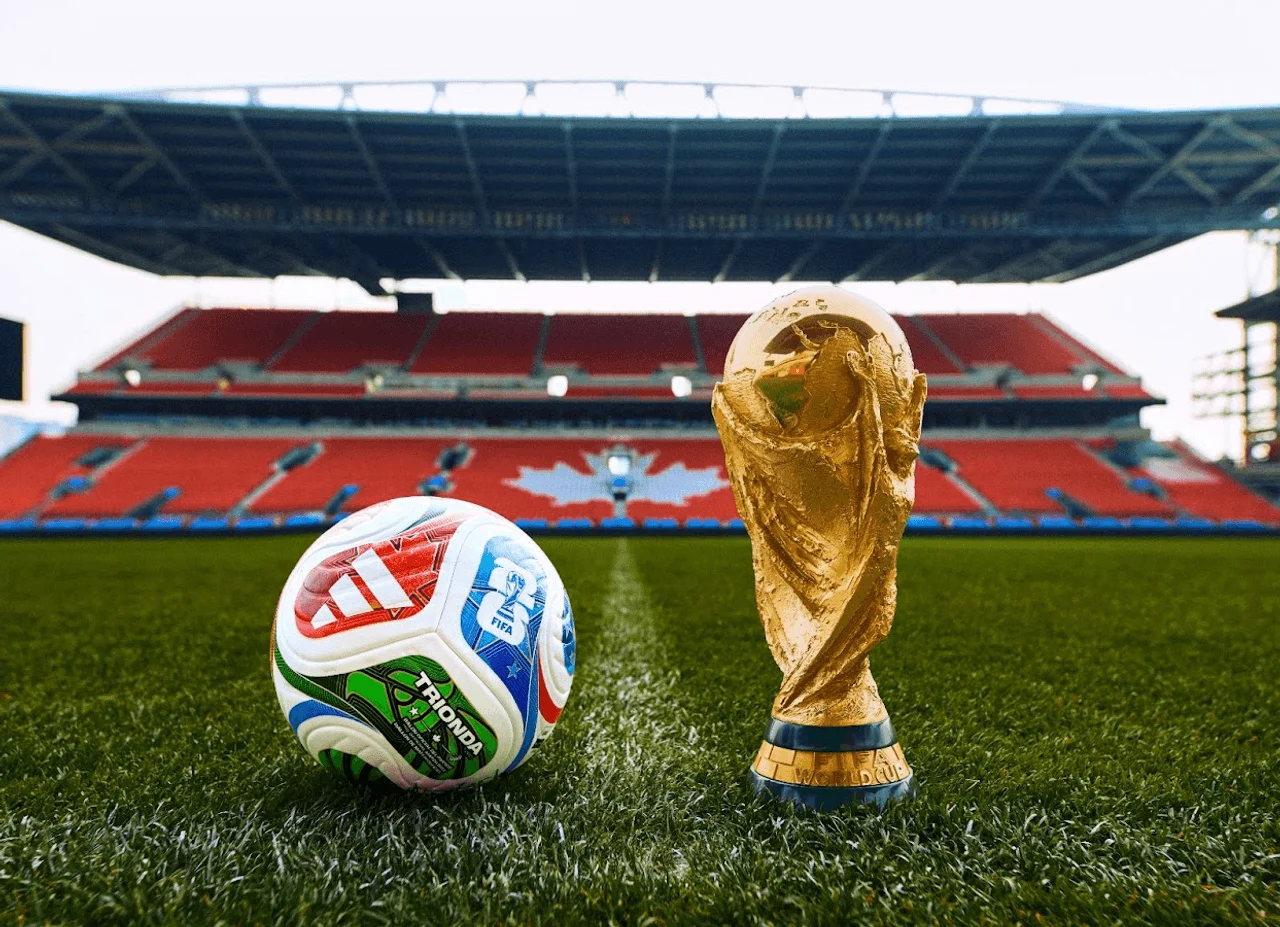
The design of the official match ball of the FIFA World Cup stands as one of the tournament’s most eagerly anticipated revelations.
From Fevernova in 2002 to Germany 2006’s Teamgeist to South Africa’s infamous, attacker-loved Jabulani in 2010 to Brazil’s Brazuca in 2014 to Russia’s Telstar in 2018 to Qatar 2022 tournament ball, where “Al Rihla” had a semi-automated offside technology and live data sharing on it, these spheres always dominate headlines.
Now, football enthusiasts who thought Al Rihla represented the pinnacle of sports science are in for a massive surprise as the tournament heads to North America.
Adidas has officially unveiled “Trionda,” a high-tech masterpiece for the 2026 World Cup that stakeholders describe as far more than just sporting equipment.
The name beautifully blends the prefix “tri”—representing the history-making co-hosts Canada, Mexico, and the United States—with “onda,” the Spanish word for wave, symbolizing both the fluid unity of the nations and the three coastlines framing the tournament.
Engineered specifically to handle the unique physics of North American altitudes, Trionda is a radical departure from its predecessors, featuring just four panels—the fewest ever used on a World Cup match ball—and deep, golf-ball-like seams designed to ensure stable air drag and a highly predictable flight path.
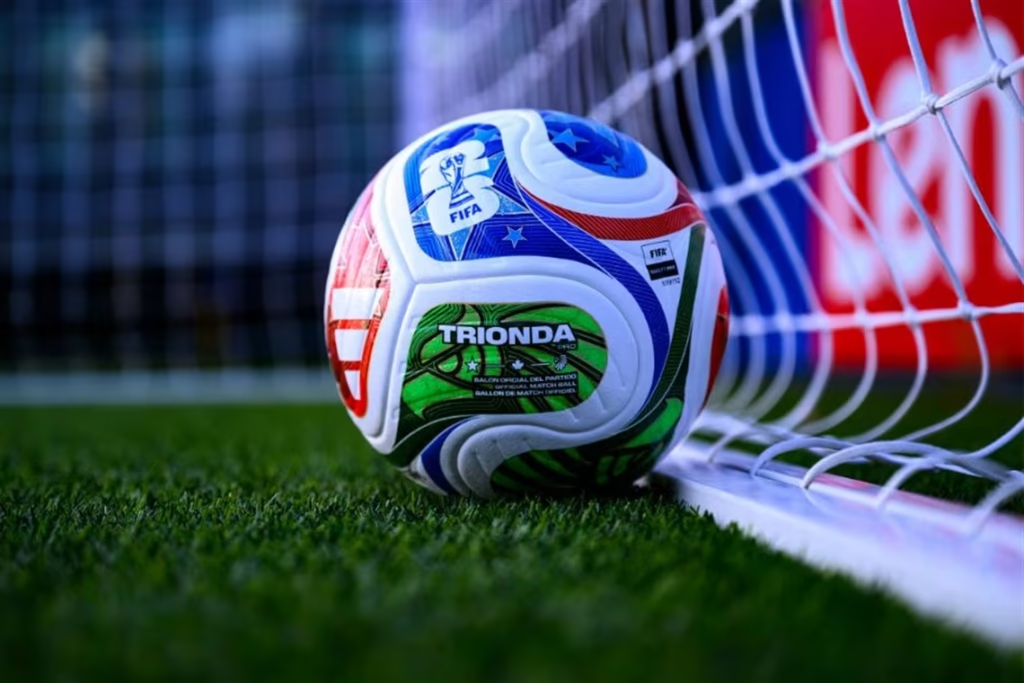
Beyond its physical aerodynamics, Trionda’s most mind-blowing feature is that it requires a charging station. A single 90-minute charge powers the ball for up to six hours, sustaining a central motion sensor that tracks every touch, kick, and deflection in real-time.
This sensor broadcasts data 500 times per second to the VAR center, allowing FIFA’s semi-automated offside technology to pinpoint the exact millisecond of a kick and resolve tight calls in seconds.
Marrying this peak performance with rich cultural aesthetics, Trionda is also Adidas’ most sustainable and visually playful ball yet, constructed entirely with water-based glues and inks.
To celebrate the host nations, individual matches will feature color-coded variations—red for Canada, green for Mexico, and blue for the U.S.—each subtly embossed with a maple leaf, golden eagle, and five-pointed star.
Finished with striking gold embellishments that pay homage to the prestigious FIFA World Cup Trophy, this connected piece of engineering is officially ready to redefine the beautiful game on the world’s biggest stage.