
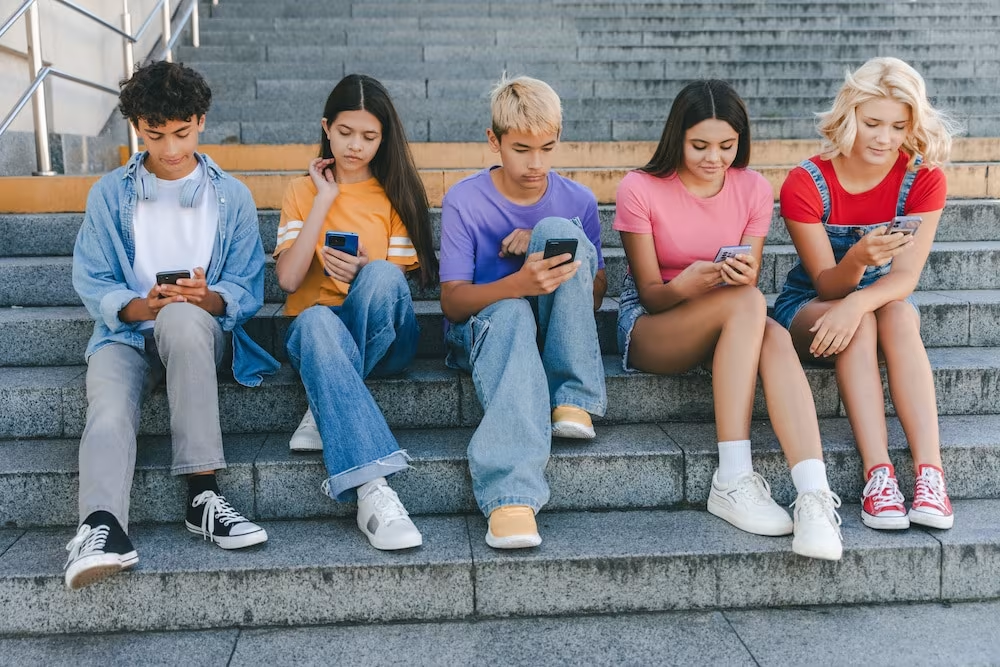
British Prime Minister Keir Starmer on Monday announced a forthcoming total ban on social media for children under 16, stating that such platforms are “making children unhappy” and exposing them to addictive, dangerous content.
The proposed restriction will target major platforms including Snapchat, TikTok, YouTube, Instagram, Facebook, and X, though messaging services like WhatsApp will be exempt.
The government aims to pass the regulation by late December, with the ban scheduled to take effect in the spring of next year.
The UK’s initiative is part of an aggressive, broader crackdown on digital spaces that includes targeting gaming services and live-streaming platforms where strangers can contact minors.
Influenced by Australia’s recent pioneering ban, the British government is also considering overnight curfews and enforced breaks in infinite scrolling for users under 18, with further details expected in July.
However, the announcement has already faced pushback; a spokesperson for YouTube warned that a blanket ban could inadvertently push children toward “less safe services.”
This sweeping policy follows a government-led consultation that closed in late May, drawing a massive 116,000 responses.
The data revealed overwhelming public support, with 83 percent of responding parents stating that the risks of social media outweigh the benefits, and 91 percent backing the under-16 age limit.
The UK joins a growing global movement, following Indonesia’s enforcement of a similar ban in March and Canada’s recent introduction of the Digital Safety Act, which also aims to restrict social media access for minors.
The tech crackdown follows a separate directive issued last week, giving tech giants like Apple and Google three months to implement safety features blocking minors from sending or receiving nude images.
The government warned it will introduce forced legislation if companies fail to comply, citing a “moral responsibility” to protect children from abuse and sextortion.
According to data from the Internet Watch Foundation cited by the government, 91 percent of online child sexual abuse reports recorded in 2024 involved self-generated content from the children themselves.