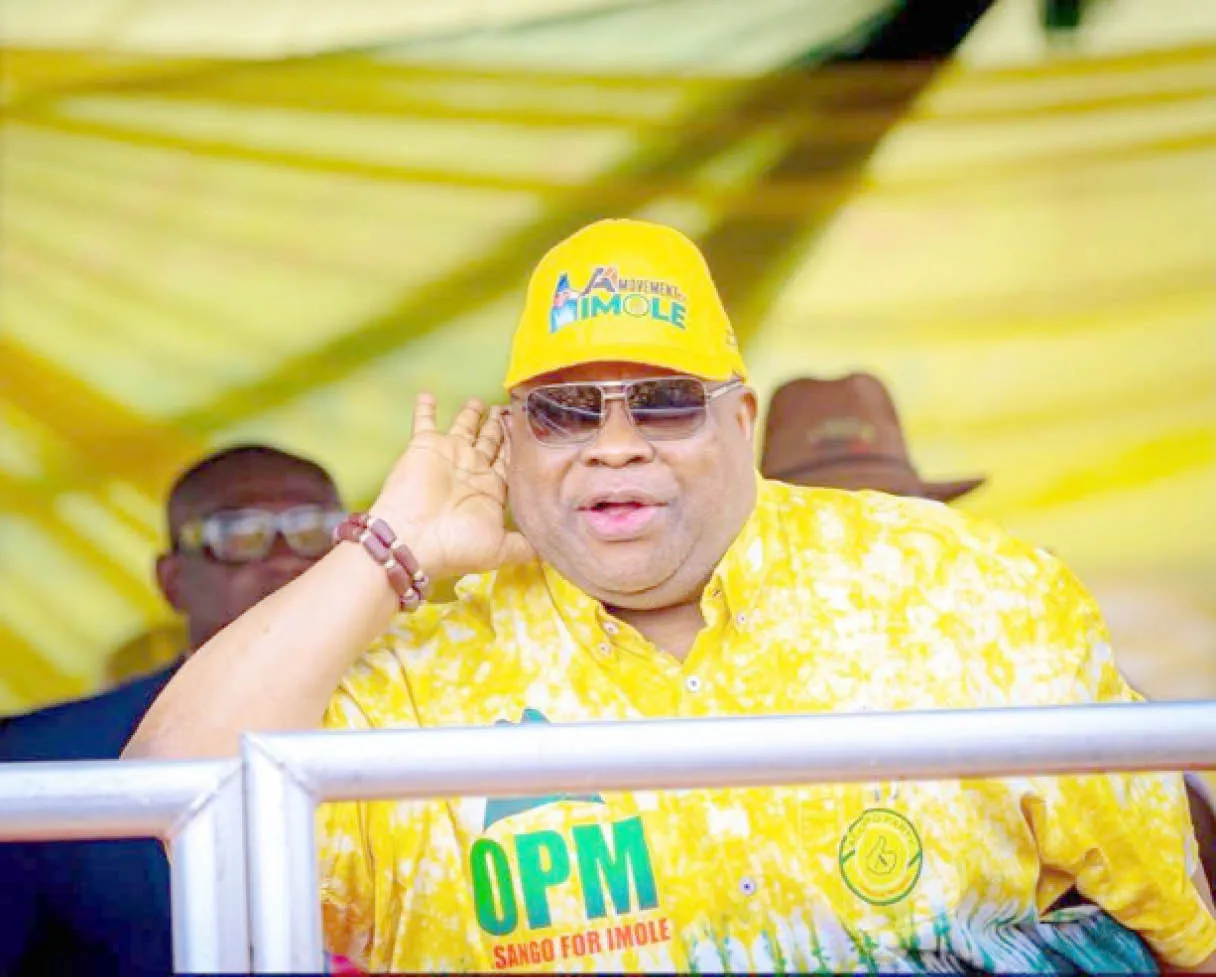
The Independent National Electoral Commission declared Governor Ademola Adeleke of the Accord Party the winner of the Osun State governorship election after he polled 511,067 votes to defeat Bola Oyebamiji of the All Progressives Congress, who scored 444,815 votes.
Adeleke secured victory across 19 of the state’s 30 local government areas, while Oyebamiji won in 11, securing Adeleke a second term in office following his initial 2022 victory.
Reacting to the outcome, President Bola Tinubu stated that he personally called Adeleke to congratulate him, noting that the victory reaffirmed the confidence of Osun residents in his leadership.
In a statement by his Special Adviser on Information and Strategy, Bayo Onanuga, the President urged the governor to unite the state for socioeconomic progress, while also commending the other contestants, INEC, and security agencies for a peaceful process.
The Nigeria Governors’ Forum (NGF), led by Kwara State Governor AbdulRahman AbdulRazaq, similarly congratulated Adeleke, praising voter turnout and the resilience demonstrated during the off-cycle election.
National leaders and political figures, including former Vice President Atiku Abubakar, Peter Obi, and Donald Duke, also weighed in, describing the outcome as a significant milestone and a potential litmus test for the upcoming 2027 general elections.
While opposition groups and parties such as the African Democratic Congress (ADC) and factions of the Peoples Democratic Party (PDP) celebrated the result, some raised concerns regarding delays in uploading results to the INEC Result Viewing Portal and reported procedural hitches.
The ADC specifically called on the electoral commission to provide clarity regarding the temporary halt in portal updates to reinforce public trust.
The All Progressives Congress announced that it is currently reviewing the election results alongside its legal team to determine its next steps.
Through its Osun Director of Media and Information, Kola Olabisi, the party stated that the declaration does not preclude constitutional recourses, emphasizing that it will explore provisions under the Electoral Act to address perceived anomalies while urging its supporters to remain calm.
In his victory speech at his country home in Ede, Governor Adeleke appealed for peace and unity, extending an olive branch to his co-contestants and observing a moment of silence for victims of pre-election violence.
Pledging to reinforce his administration’s five-point agenda, Adeleke dedicated his mandate to the people of Osun State and affirmed his commitment to governing equitably for all residents regardless of political affiliations.
Civil society organizations and inter-party bodies also reacted to the conclusion of the polls, with the Inter-Party Advisory Council (IPAC) commending stakeholders while noting isolated instances of pre-election tensions.
The Transition Monitoring Group (TMG), represented by Auwal Musa Rafsanjani, urged politicians to respect the mandate of the electorate and advised aggrieved parties to channel grievances through lawful judicial avenues rather than destabilizing the peace.
As the state transitions into a new political phase following the conclusion of voting, attention has increasingly shifted toward broader national implications.
Political analysts and coalitions, including the Allied Peoples Movement (APM), view the Osun outcome as a critical indicator of shifting voter dynamics and expectations ahead of the 2027 general elections.