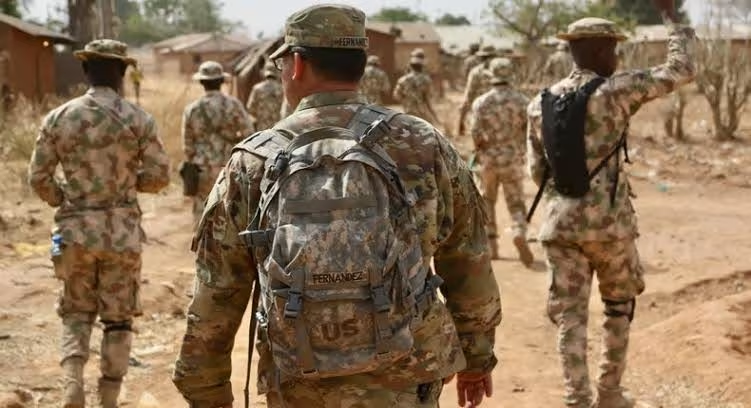
The United States is preparing to withdraw approximately 200 military personnel deployed to Nigeria for counterterrorism operations, with the main contingent expected to depart by late September.
According to a report by The New York Times, the decision marks a shifting phase in bilateral security cooperation between Washington and Abuja.
American and Nigerian officials noted that the deployment, while relatively small in scale, yielded significant results in the ongoing fight against Islamist militants.
Small teams of U.S. trainers and intelligence analysts are expected to remain in the country following the broader withdrawal to maintain baseline support.
U.S. officials reportedly regarded the Nigerian deployment as a potential blueprint for future American counterterrorism operations across Africa.
This assessment stems from the operational successes achieved through a strategic combination of direct military assistance, advanced intelligence support, and targeted training programs.
The drawdown follows statements made last month by U.S. Africa Command commander, Gen. Dagvin Anderson, who confirmed that many troops had already left following a successful May operation.
That mission resulted in the death of Abu-Bilal al-Minuki, identified as the second-in-command of ISIS in the Lake Chad Basin.
Gen. Anderson stated that the operation severely fractured the leadership structure of ISIS both locally and internationally, prompting heightened counter-disruption efforts by Nigerian forces.
Despite the reduction in boots on the ground, Gen. Anderson emphasized that the United States will sustain its intelligence partnership with Nigeria.
Washington’s security engagement will persist through continuous intelligence-sharing and cooperative oversight, even as direct troop numbers decrease.
This realignment of forces coincides with broader diplomatic and security developments. Weeks prior, Nigeria and the U.S. held bilateral talks in Washington via a joint working group focused on the protection of communities in Nigeria’s Middle Belt, following complex diplomatic discussions over regional religious freedoms and security designations.