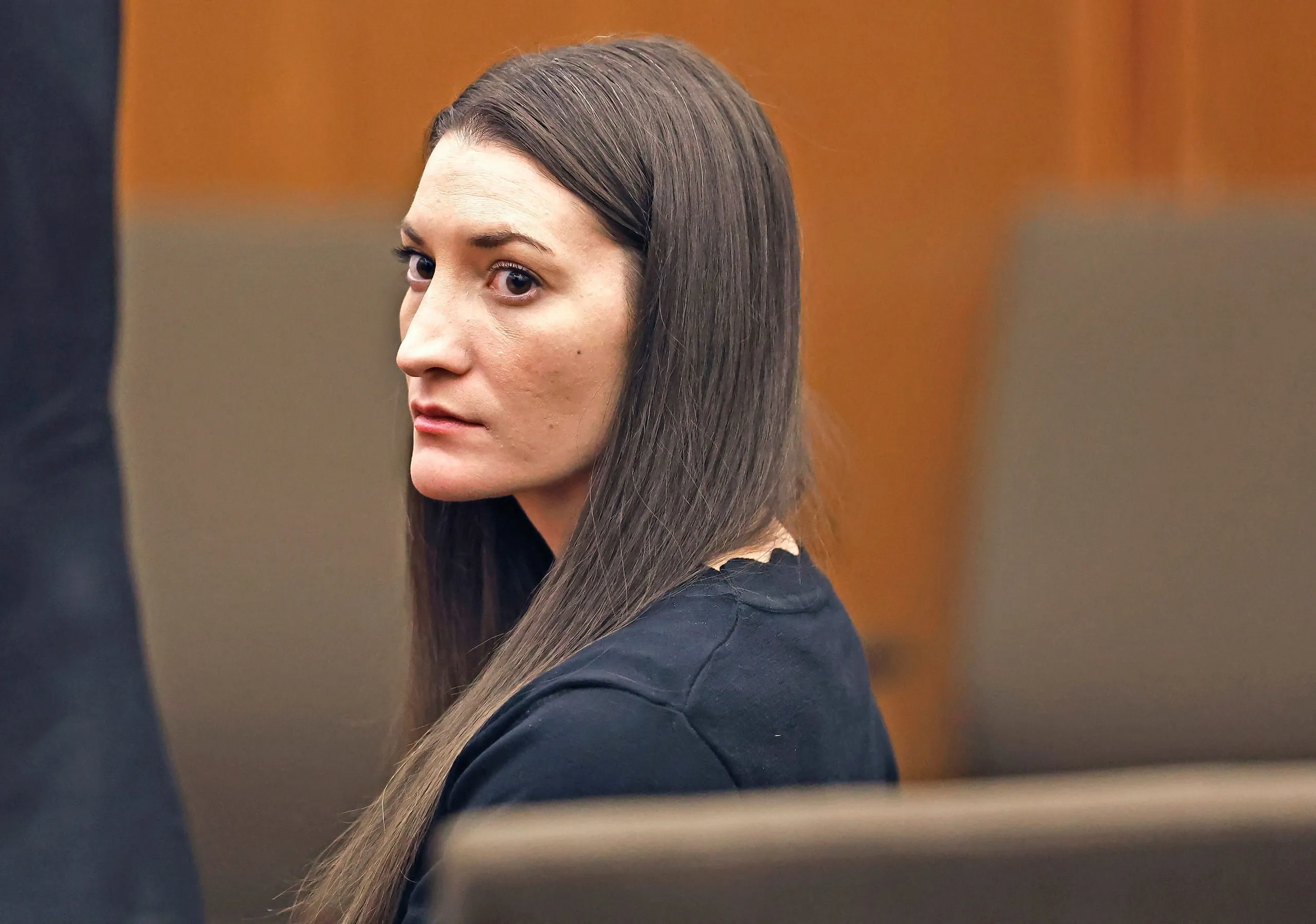
US President Donald Trump has stated that he will not intervene in the high-profile legal case of Lindsay Clancy, a Massachusetts mother accused of killing her three young children in January 2023.
Clancy, 36, faces three counts of first-degree murder for the deaths of Cora, 5, Dawson, 3, and eight-month-old Callan.
Her defense team has maintained that she suffered from severe postpartum psychosis at the time of the incident, a psychiatric condition that causes a complete loss of contact with reality following childbirth.
Following the tragedy, Clancy attempted suicide, leaving her paralyzed from the injuries she sustained.
The question of presidential involvement arose after Clancy’s defense attorney, Kevin Reddington, publicly appealed to Trump to pardon his client last week, despite acknowledging that the office lacks the constitutional authority to pardon individuals convicted of state offenses.
When asked about the appeal, Trump declined to take action, emphasizing that the matter falls entirely under state jurisdiction rather than federal purview.
Describing the situation as an unmitigated tragedy, Trump expressed deep sympathy while firmly drawing a jurisdictional boundary. “It is a very sad situation,” Trump remarked, adding that “there is no winner there. There is no win no matter what you do. Three children are dead. So, I don’t know. It’s actually a state situation, you know, not a federal.”
Despite declining to intervene, Trump praised Reddington’s professional reputation, stating, “He’s a good attorney. I’ve heard from other people he’s a very good attorney. I hope they can work it out. That’s something they have to work out.”
The legal proceedings surrounding the case have proven deeply complex, with the initial trial concluding in a mistrial earlier this month after a week of intense deliberations failed to yield a unanimous verdict.
According to reports, the jury was split 11 to 1, with the overwhelming majority favoring an acquittal based on the argument that Clancy was not criminally responsible due to her mental state.
As the state-level legal battle prepares for its next phase, the case continues to spark nationwide debate over mental health awareness, the legal recognition of postpartum psychosis, and the boundaries of justice in profound family tragedies.