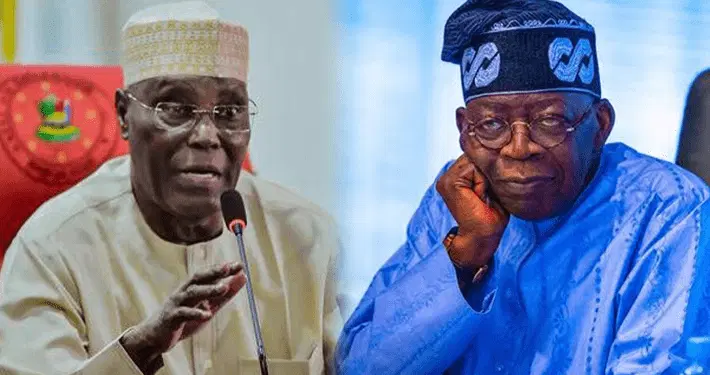
Nigeria’s former Vice President, Atiku Abubakar, has launched a scathing critique of President Bola Tinubu’s latest request for Senate approval of a $516.3 million external loan.
The loan, intended to finance the ambitious Sokoto-Badagry 1,000km Super Highway, has sparked a heated debate over Nigeria’s fiscal future. In a statement released on Wednesday by his aide, Phrank Shaibu, Atiku cautioned the administration against reckless spending, asserting, “At a time when Nigeria is already groaning under the weight of unsustainable debt, the resort to yet another foreign loan, without transparent terms, raises profound questions about prudence and accountability.”
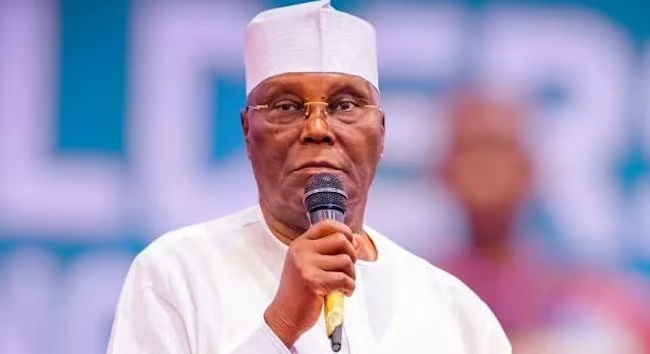
President Tinubu’s proposal, read during plenary by Senate President Godswill Akpabio, outlines a syndicated loan secured through Deutsche Bank AG and supported by the Islamic Corporation for the Insurance of Investment and Export Credit (ICIEC). The federal government also plans to provide N265.5 billion in counterpart funding for land acquisition and compensation. Tinubu emphasized that the project is a critical economic corridor linking seven states from the North-West to the South-West, urging the Senate for “expeditious passage” to begin construction on the high-capacity carriageway.
Despite the project’s scale, Atiku raised concerns over the lack of competitive bidding, drawing parallels to previous controversial infrastructure deals. He noted that while development is necessary, it must not come at the cost of national sovereignty or economic stability. “Nigerians have not forgotten the serious questions surrounding the opaque award process of the Lagos-Calabar Coastal Highway,” Atiku stated, adding a firm warning: “Nigeria must build, but Nigeria must not borrow blindly. Progress anchored on opacity and debt accumulation is neither progress nor leadership; it is postponement of crisis.”
In contrast, Senate President Akpabio defended the borrowing plan, describing the superhighway as a “major economic game changer” capable of boosting national productivity and saving lives through improved transit. Akpabio maintained that borrowing for critical infrastructure is justified when the long-term economic benefits facilitate repayment. Following the deliberations, the request was referred to the Senate Committee on Local and Foreign Debts, with a mandate to report back within one week for final consideration.