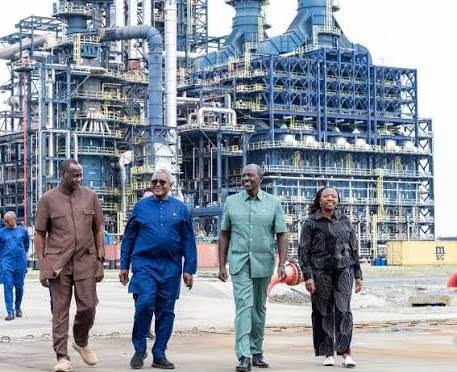
Africa’s richest man, Aliko Dangote, is scheduled to break ground on Wednesday on a massive $16 billion oil refinery in Lamu, Kenya.
Boasting a projected capacity of 700,000 barrels per day, the facility is designed to surpass the capacity of any refinery in Europe.
Dangote chose the Indian Ocean coast location for its deep-sea access, solid terrain, and clean water after considering alternative sites in Tanzania and Mombasa.
The ambitious project has navigated immediate hurdles, including an ongoing local community lawsuit concerning land rights and objections from environmental groups like Greenpeace.
A court ruling on Monday permitted the ground-breaking ceremony to proceed while the legal proceedings continue.
Dismissing the pushback, Dangote asserted that such opposition stems from resistance to African development and emphasized that the region cannot afford to delay critical infrastructure.
To address questions regarding feedstock, Dangote explained that the refinery will initially source crude oil from international markets, including the Middle East and the United States.
However, the facility is strategically positioned to absorb future production as emerging reserves in East African nations like Kenya, Tanzania, and Mozambique come online.
He also noted that shifting political landscapes, such as U.S. diesel export threats, reinforce the urgency of local refining.
Beyond petroleum processing, the mega-refinery project incorporates a 1,000-megawatt power facility designed to channel half of its electricity generation directly into the Kenyan national grid.
Furthermore, Dangote stressed a commitment to self-reliance and local capacity building, stating that future continental projects should minimize reliance on foreign engineering expertise from outside Africa.
Framing the massive plant as merely a foundational milestone, Dangote projects that the majority of African nations will achieve fuel self-sufficiency by 2030.
Despite its massive output, he characterizes the 700,000 barrels-per-day capacity as a modest start-up step required to meet surging continental demand as Africa’s economy continues to expand rapidly.