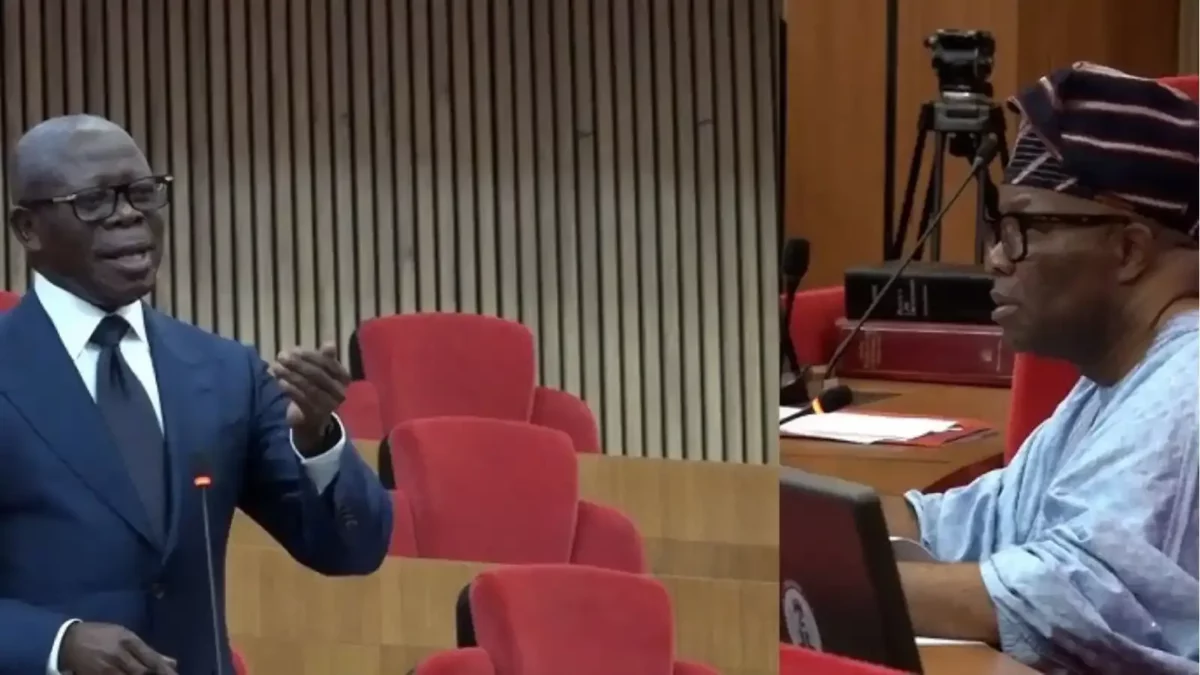
The floor of the Nigerian Senate descended into a volatile shouting match on Wednesday, as a heated confrontation between Senate President, Godswill Akpabio, and Senator Adams Oshiomhole (APC, Edo North) disrupted proceedings for over 15 minutes.
The disorder erupted during the reading of the Votes and Proceedings from Tuesday’s session when Oshiomhole attempted to raise a point of order, a move Akpabio immediately ruled out of order.
Citing the Standing Order 2023 as amended, Akpabio reminded his colleague that such interruptions are not permitted during the formal review of previous minutes, at one point bluntly remarking, “We should not just go home, buy forms and come here without knowing the rules.”
The tension escalated rapidly as Oshiomhole refused to yield the floor, prompting Akpabio to call on other ranking members to “educate” the former Edo governor.
Senate Whip, Tahir Monguno, warned he would invoke disciplinary powers to restore order, while Akpabio issued a final, stinging ultimatum to the defiant senator. “Oshiomhole, if you become unruly, we will use the rules to take you out of the Senate,” the Senate President cautioned.
Despite the friction, the session eventually proceeded to the adoption of the proceedings following motions by Senators Adamu Aliero and Abba Moro.
Insiders suggest Oshiomhole’s outburst is rooted in the Senate’s controversial Tuesday amendment of its standing rules, which effectively narrows the path to leadership for several high-profile lawmakers.
The new amendment to Orders 4 and 5 mandates that any candidate for the position of Senate President or other principal offices must have served at least two consecutive terms, specifically including the immediate preceding term.
This “ranking” rule states: “Any Senator shall not be eligible to contest for any Principal Office of the Senate unless he has served as a Senator for at least two consecutive terms immediately preceding nomination.”
This legislative maneuver is widely viewed as a strategic move to “scheme out” certain political heavyweights ahead of the 2027 general elections.
By limiting eligibility to those currently serving in the 10th Assembly who were also present in the 9th, the door has been slammed shut on ambitious lawmakers like Oshiomhole, Hope Uzodimma, and Kabiru Marafa.
While the Senate maintains the change is intended to “engender strict compliance with the parliamentary tradition of ranking,” the resulting friction suggests a deepening divide within the upper chamber over the future of its leadership.