
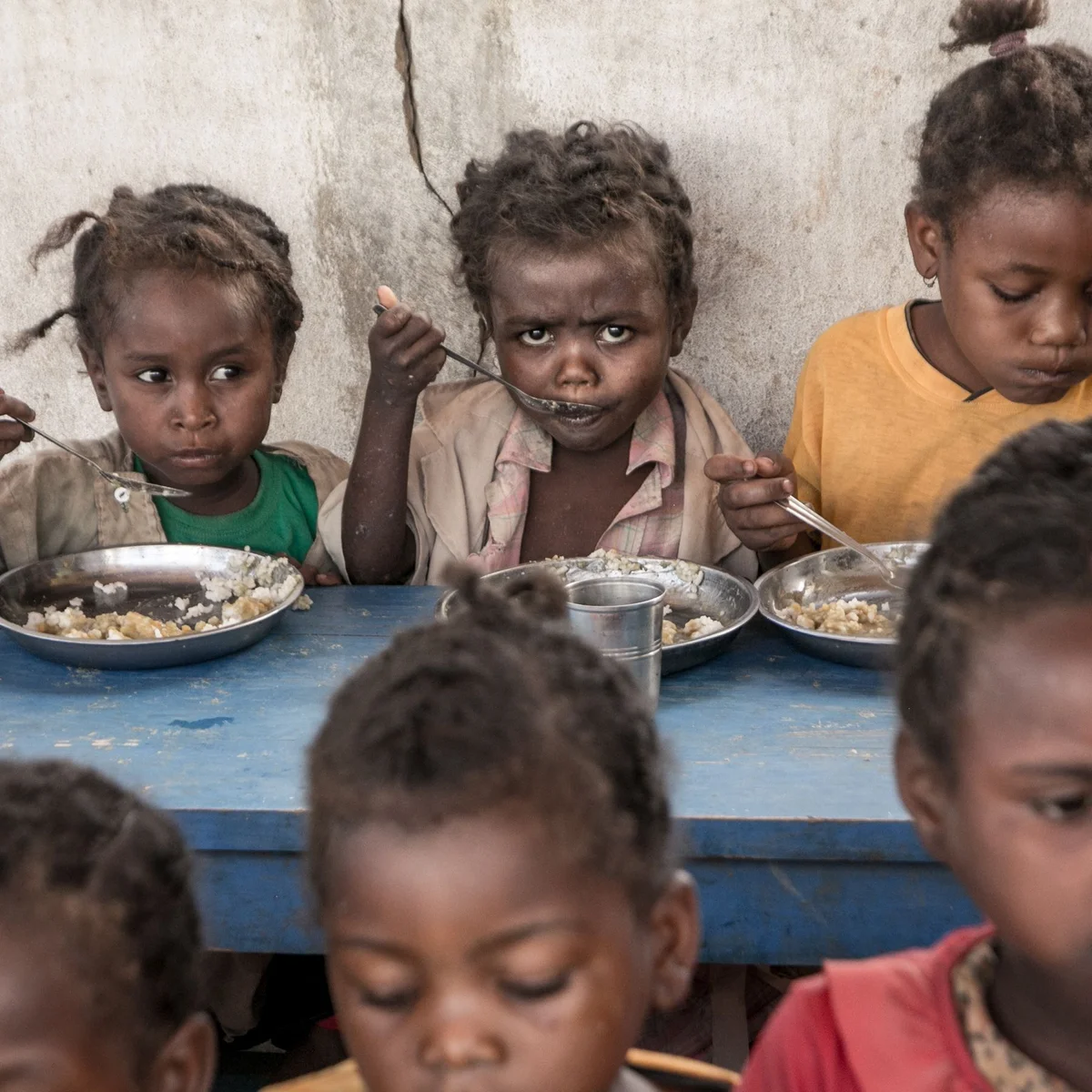
A newly released United Nations-backed report has revealed a staggering global hunger crisis, noting that two-thirds of the world’s food-insecure population last year were concentrated in just 10 countries.
According to the 10th edition of the Global Report on Food Crises, a third of those affected reside in Sudan, Nigeria, and the Democratic Republic of Congo. The report, which draws on data from the UN, the European Union, and various humanitarian agencies, confirmed that roughly 266 million people across 47 territories experienced high levels of acute food insecurity—a figure that has nearly doubled since 2016.
The study identified conflict as the primary driver of this devastation, while warning that the outlook for 2026 remains “bleak” as war and climate extremes continue to ravage vulnerable regions. For the first time in the report’s history, famine was simultaneously confirmed in two separate locations: Gaza and parts of Sudan. Highlighting the concentration of the crisis, the report stated: “Acute food insecurity remains highly concentrated (in) 10 countries — Afghanistan, Bangladesh, the Democratic Republic of the Congo, Myanmar, Nigeria, Pakistan, South Sudan, Sudan, Syrian Arab Republic, and Yemen.”

Beyond the immediate violence, the report warned that the Middle East conflict is aggravating global conditions by driving up fertilizer costs and displacing millions. The potential blocking of the Strait of Hormuz has sent shockwaves through agricultural markets, as fertilizer production relies heavily on oil-based inputs. Alvaro Lario, head of the UN’s International Fund for Agricultural Development (IFAD), expressed deep concern over the timing, stating, “Now we’re in planting season, so for sure this current food shock — both with the energy prices going up and also fertilisers going up — I think it’s going to have a massive impact in terms of production.”
To combat this downward spiral, the IFAD is calling for urgent investment in small-scale farmers and climate-resilient crops. Lario emphasized the need for localized solutions, such as producing fertilizer domestically and improving soil health to reduce dependency on expensive imports. He further stressed the importance of private sector involvement to ensure long-term stability, noting: “Creating the instruments and incentives for the local private sector is a very important way of making that sustainability and that development money go a longer way.”