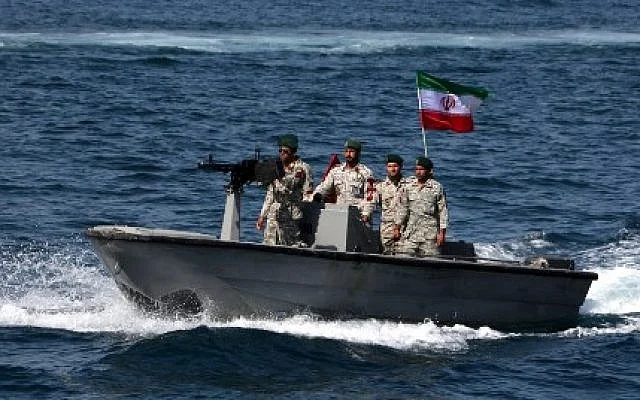
Iran’s Revolutionary Guards announced on Thursday that naval forces have begun allowing a selection of Chinese vessels to transit the strategic Strait of Hormuz, marking a notable shift in the waterway’s rigid blockade.
This development follows a period of near-total closure by Tehran since the outbreak of hostilities with the United States and Israel on February 28.
According to a statement from the Guards, the ideological arm of the Iranian military, the decision was reached after an agreement was secured regarding “strait management protocols” for ships specifically requested by Beijing.
The easing of restrictions reportedly began late Wednesday night, with Iranian state television indicating that more than 30 ships have already been permitted to pass.
While the Revolutionary Guards’ statement focused on Chinese-requested vessels, it remains unclear if every ship in the recent convoy was flying a Chinese flag.
In peacetime, the Strait of Hormuz serves as the world’s most critical maritime chokepoint, facilitating the transit of roughly 20% of global oil and liquefied natural gas shipments, alongside other essential commodities.
Iran’s tight grip on the waterway has continued to rattle global energy markets and has provided Tehran with significant geopolitical leverage throughout the ongoing conflict.
This maritime dominance serves as a direct countermeasure to the United States’ own naval blockade currently imposed on Iranian ports.
The move to grant China access is widely viewed as a strategic gesture to a key economic partner, highlighting the complex web of alliances currently defining the regional war.
The timing of the transit is particularly significant, coinciding with U.S. President Donald Trump’s visit to China. President Trump met with Chinese President Xi Jinping on Thursday for high-stakes discussions that heavily featured the war with Iran.
As the two superpowers negotiate, the sudden reopening of the Strait to Chinese traffic suggests that Beijing may be playing an increasingly central role in mediating—or navigating—the volatile standoff between Washington and Tehran.