
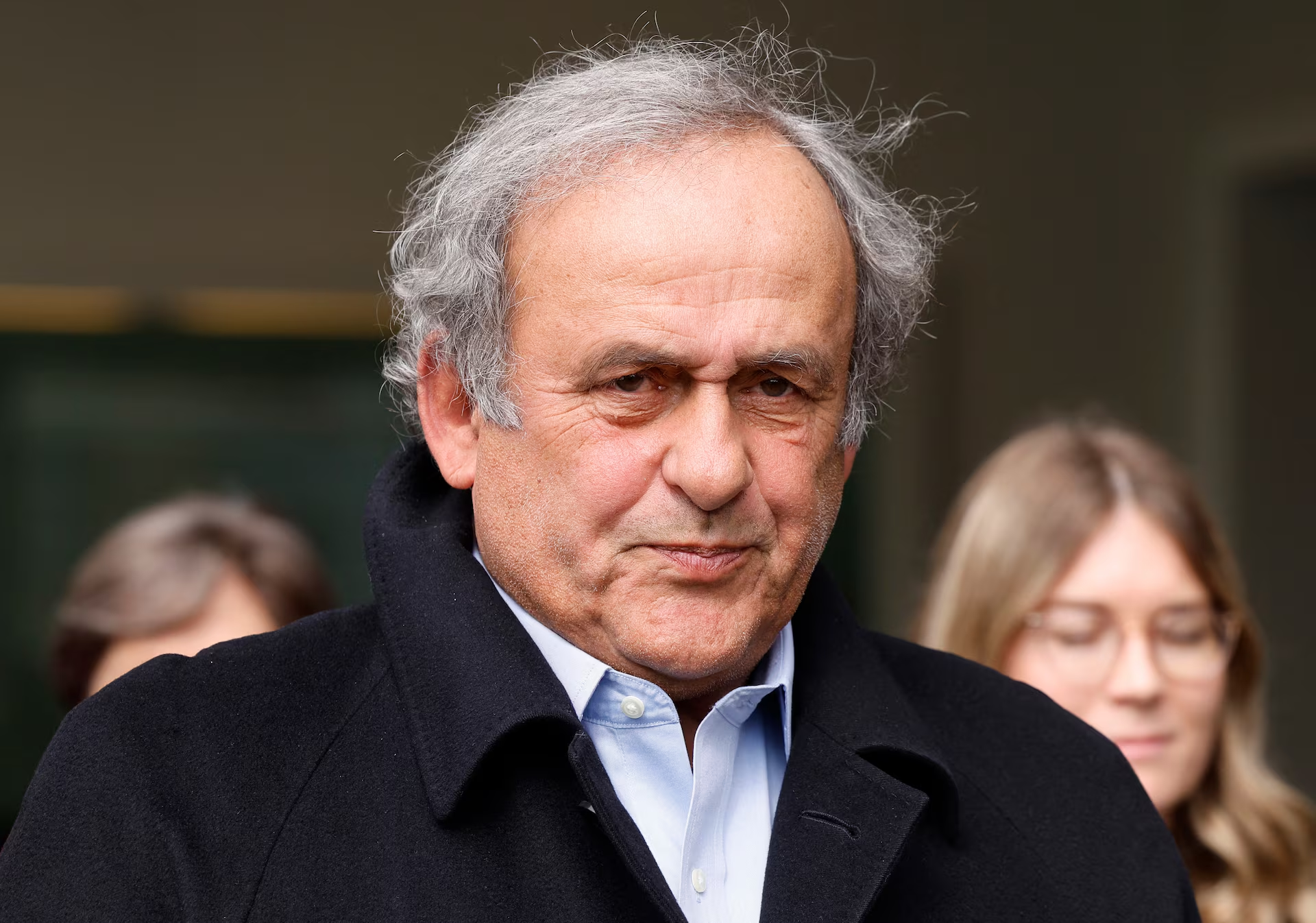
Former UEFA president, Michel Platini, has launched major legal proceedings against FIFA and its current president, Gianni Infantino, over the 2015 corruption allegations that he claims destroyed his chances of leading world football.
According to reports, the 70-year-old French football legend has filed both criminal and civil cases in France.
The lawsuit targets Infantino alongside former FIFA legal director, Marco Villiger, and former audit committee chairman, Domenico Scala, with Platini seeking substantial financial compensation for what he alleges was a orchestrated effort to block his bid for the top job.
The legal battle traces back to 2015 when Platini was widely regarded as the frontrunner to succeed Sepp Blatter as FIFA president.
His campaign was abruptly derailed when both men became embroiled in controversy over a 2011 payment of two million Swiss francs made to Platini and approved by Blatter.
The resulting investigation by FIFA’s ethics committee led to lengthy bans for both officials—originally set at eight years before the Court of Arbitration for Sport reduced Platini’s sanction to four years—effectively ending his hopes of taking charge of world football’s governing body.
In a major development last year, the long-running saga took a dramatic turn when both Platini and Blatter were officially cleared of fraud and corruption charges by a Swiss federal criminal appeals court.
With his name cleared in court, the three-time Ballon d’Or winner now argues that the original allegations and subsequent disciplinary actions were weaponized to unjustly prevent him from taking office.
Ironically, it was Infantino—who served directly under Platini as UEFA’s general secretary—who ultimately succeeded Blatter as FIFA president and continues to run the organization today.
While FIFA has yet to publicly respond to the latest legal action, the lawsuit threatens to reopen one of the most controversial chapters in football governance.
By dragging FIFA’s top brass back into the courtroom, Platini’s criminal complaint is expected to once again place the organization’s leadership, internal politics, and decision-making processes under intense global scrutiny.