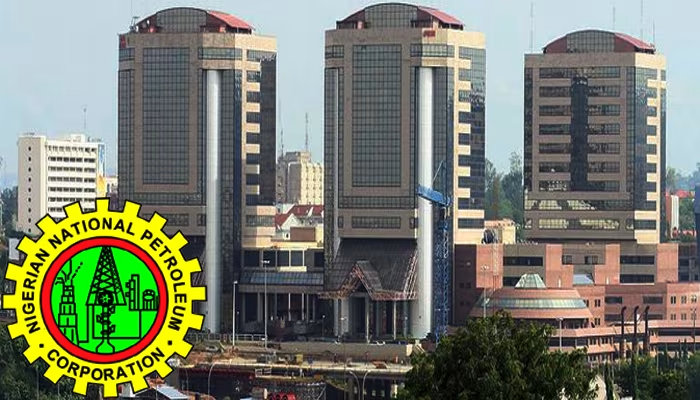
The Nigerian National Petroleum Company Limited (NNPC) has significantly raised the official selling prices for all 37 grades of Nigerian crude for May-loading cargoes.
According to reports from Oilprice.com, the flagship Bonny Light grade saw a substantial increase of $6.13 per barrel compared to April, while the Forcados grade surged by $7.01 per barrel.
This aggressive pricing strategy suggests that Nigeria is positioning itself to capitalize on the supply disruptions and market volatility triggered by the ongoing US-Iran conflict.
Market tensions reached a fever pitch on Tuesday as Bonny Light hit $124.86 per barrel, trading approximately $14 above the global Brent benchmark, which itself surpassed $110.
Investors are increasingly wary that the geopolitical friction could devolve into a protracted “forever” conflict, especially following the collapse of the Islamabad talks and subsequent hardline rhetoric from Washington. Adding to the market’s complexity, the UAE’s sudden exit from OPEC has sparked widespread speculation regarding a fundamental realignment of Middle Eastern energy policies.
While the federal government stands to gain from a massive influx of oil revenue, energy experts warn of a “two-edged sword” for the domestic economy. The Central Bank of Nigeria noted that Bonny Light was priced at roughly $74 before the crisis escalated on February 28; the current spike threatens to significantly increase costs for the Dangote Petroleum Refinery.
Such an uptick in production costs is expected to trickle down to the pumps, further driving up fuel prices and exacerbating inflationary pressures on transportation and essential goods.
In response to the mounting economic strain, Professor Adeola Adenikinju, a prominent energy economist, has called for the immediate implementation of targeted cash transfers to protect vulnerable citizens. While acknowledging the revenue gains for the state, he emphasized that rising costs are disproportionately affecting low-income households.
However, Adenikinju cautioned that the lack of a comprehensive national database for the poor remains a major hurdle, urging federal and state governments to collaborate on support mechanisms that extend beyond civil servant allowances to reach the informal sector.