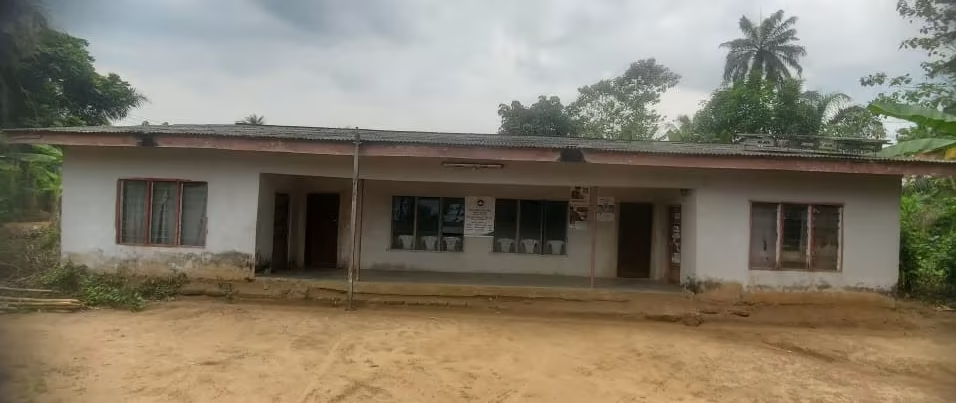
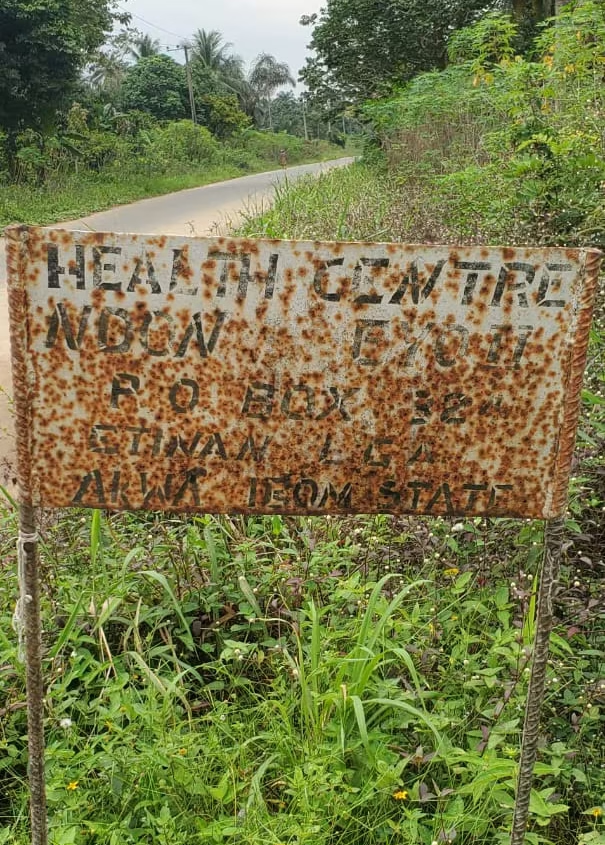
Residents of Ndon Eyo II in Etinan Local Government Area of Akwa Ibom State are demanding urgent government intervention as their Primary Health Centre continues to fail the community it was meant to serve.
A joint visit by BudgIT Nigeria and XL News revealed the scale of the problem. The facility stood locked, with no health workers on duty. No sign of care. No explanation.
Seeking answers, the team engaged the village head, who referred us to Mr Jermiah Akpan, a retired health attendant familiar with the centre’s operations. He confirmed that the facility is expected to operate from Monday to Friday but could not explain why no staff showed up.
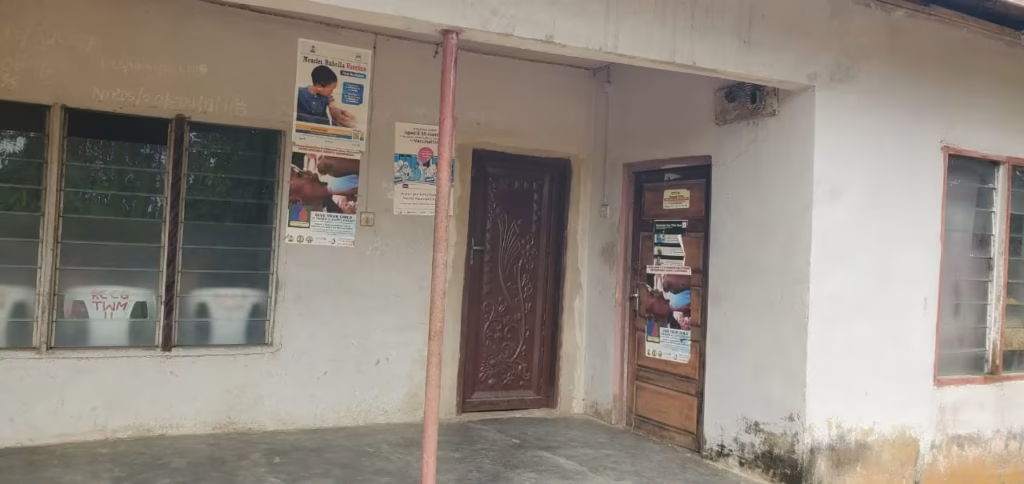
“This place is meant to function every weekday,” he said. “But what you see today is not unusual. Sometimes, you come here and meet nobody.”
For residents, that uncertainty carries real consequences.
Years of neglect
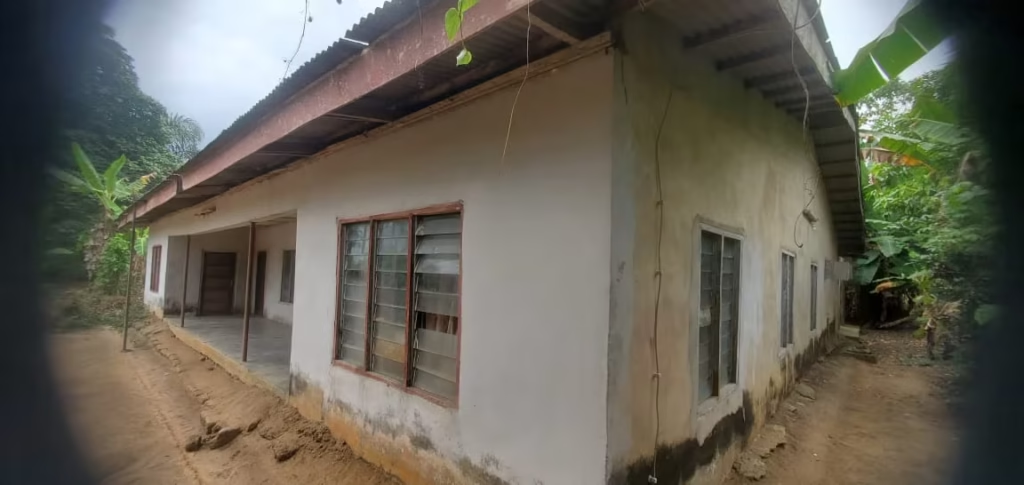
The community has operated the health centre from a rented three-room apartment since 2015. The building lacks electricity, clean water, toilets, and even basic security fencing. It cannot admit patients. Inside, two beds sit without mattresses, while parts of the ceiling are visibly damaged.
“This is not a health centre. It is just a structure,” Mr Akpan said. “How do you treat sick people in a place like this?”
Despite these harsh conditions, the facility provides limited services when staff are present. Health workers conduct child immunisation and offer free malaria testing and treatment using government-supplied drugs. For three surrounding villages, this fragile setup remains the closest access to care.
The centre operates with just three personnel – a nurse and two volunteers – serving thousands of people. Without an active Ward Development Committee, the community lacks the structure to enforce accountability or improve service delivery.
Healthcare as a right
Various legal instruments in Nigeria recognize the right to health through a combination of constitutional provisions, the National Health Act of 2014, and specific regulations.
The 1999 Constitution of the Federal Republic of Nigeria (as amended) classifies health as a non-justiciable directive principle, while the National Health Act 2014 mandates the government to provide the “best possible” healthcare services, ensuring emergency treatment without refusal.
Mr Akpan knows this. He insists, “we are not asking for too much, we are asking for what every Nigerian citizen deserves which is quality healthcare.”
Unbroken, undaunted
Determined to change their reality, the community has started building a new health centre. The structure stands as a symbol of hope, but construction has stalled due to lack of funds.
Residents are calling on the Etinan Local Government Council and the Akwa Ibom State Government to provide immediate financial support, deploy qualified health workers, and ensure consistent service delivery.
Community leaders have begun mobilising to engage authorities directly. Plans are underway to hold meetings and formally present their demands.
Until then, the people of Ndon Eyo II continue to live with uncertainty – where access to healthcare depends on chance, and where a locked door can delay or deny lifesaving treatment.